Crisis communication resources to help you protect your revenue, reputation, and brand.
Effective crisis communications when “it” hits the fan.

Our blog is filled with deep resources to help with your crisis communication needs. Whether you are writing a crisis communication plan, seeking the best media training tips, or digging for case studies on crisis situations, you’ll find it here. Our goal is to give you all of the public relations resources you need to protect your revenue, reputation, and brand.
For those of you who love DIY and taking on a challenge, we’ve worked really hard to give you a good road map to follow. However, sometimes the fastest option is to bring in a pro. If that’s the case, we’re fully vaccinated and we’re ready to meet your needs, anywhere and anytime.
If you need help with your crisis communications plan, we’re ready to help.
When you need media training for your spokespeople, give us a call.
Anytime your organization needs a great keynote for your conference, we’d value the opportunity to serve you.
We invite you to:
By Gerard Braud –-
As the media changes, your media relations strategy must change with it. We covered these changes and strategies in detail at the International Association of Business Communicators (IABC) conference in San Francisco during my Monday morning workshop, #IABC15 The Changing Media Landscape.
For those of you who attended the workshop, this blog will be part of the continuing education program you were promised. For those who missed the workshop, this will help you learn what the group learned. For those of you who would like a similar workshop for your chapter or professional association, please contact me at gerard@braudcommunications.com.
Before the teach-back segment, here are links to the two additional free training modules I offered to everyone:
Resource #1: 29-Day Media Training Online Program
Resource #2: 23-Day Video Tutorial for Smartphone News Videos
The changes in the media landscape include:
1) Reduced staffs, i.e. fewer reporters, photographers and journalists to tell your story.
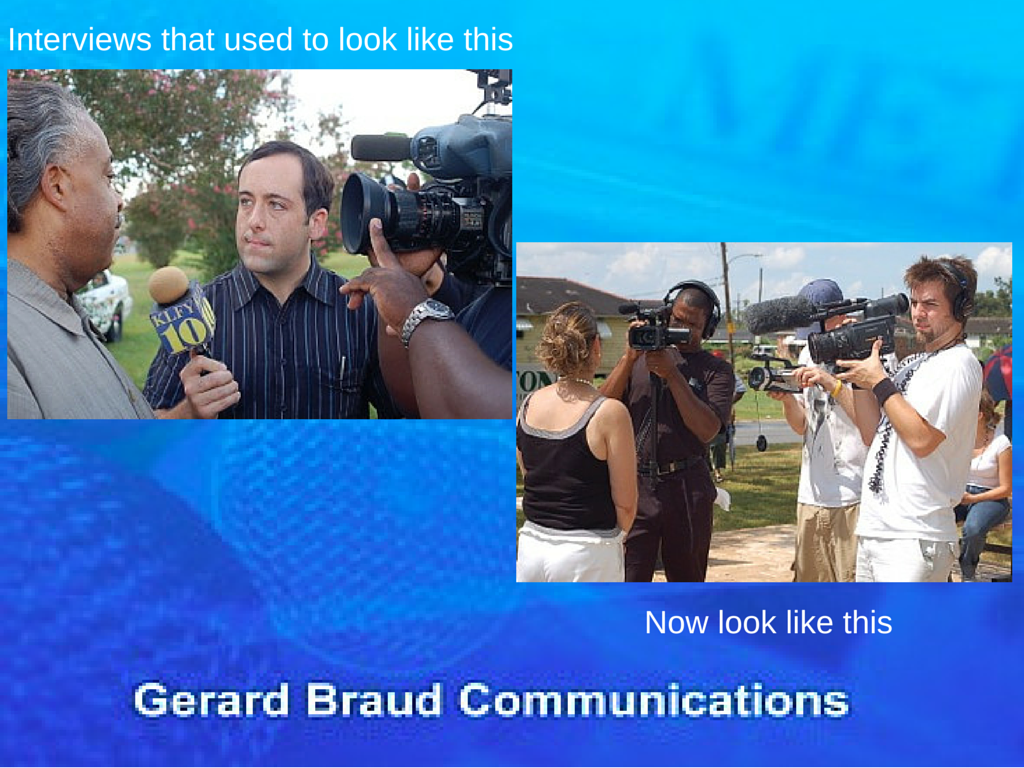
Not too long ago a typical network news crew had five people. A typical local television or print crew had a reporter and photographer. Today, newspapers and television stations alike expect a single person to be both the reporter and photographer.
2) The “Caught on Video” craze.
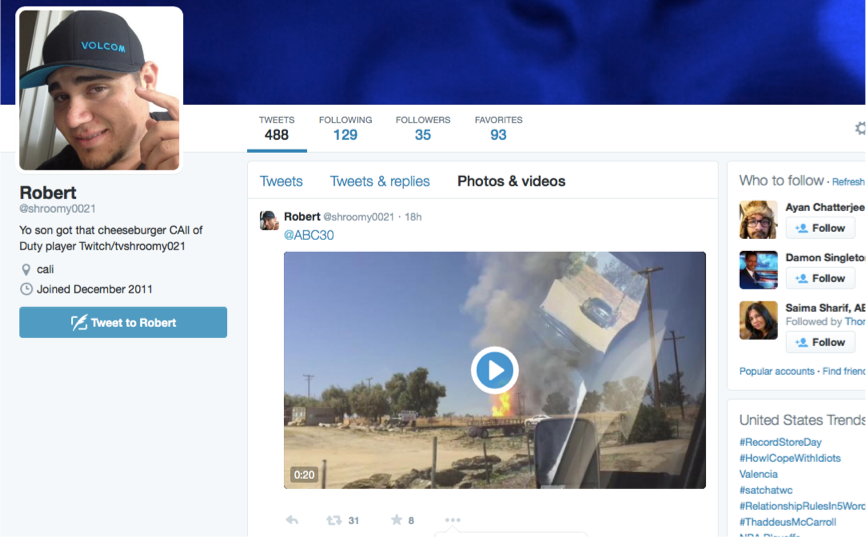 With fewer employees to gather the news, the media depend upon videos submitted by eyewitnesses. The media save a lot of money by not having to chase the news and by letting the news come to them. However, verifying authenticity and facts is a problem. The old rule of, “consider the source,” seems to have gone out the window.
![9866FC2E-26CB-4F4A-9366-0079E19FDD8E[1]](https://braudcommunications.com/wp-content/uploads/2015/06/9866FC2E-26CB-4F4A-9366-0079E19FDD8E1.png)
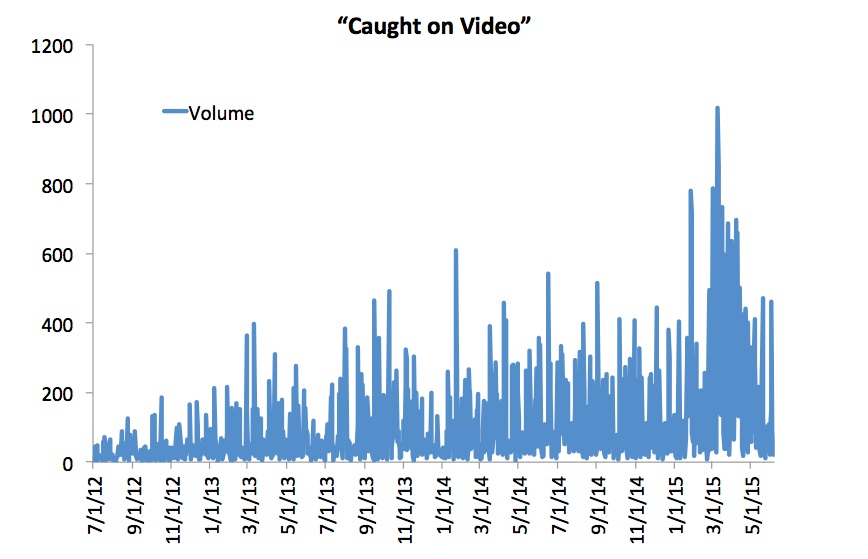 Statistics provided by IQ Media show that in the past three years, there has been a monumental jump in the number of times the phrase “caught on video” is said on television broadcasts.
3) Substituting Trending for News
Virtually every television news cast and every media website feature a segment about what is trending. This means that television airtime and web space are being filled with fluff provided by social media, rather than news gathered by professionals.
Statistics provided by IQ Media show that in the past three years, there has been a monumental jump in the number of times the phrase “trending” is said on television broadcasts.

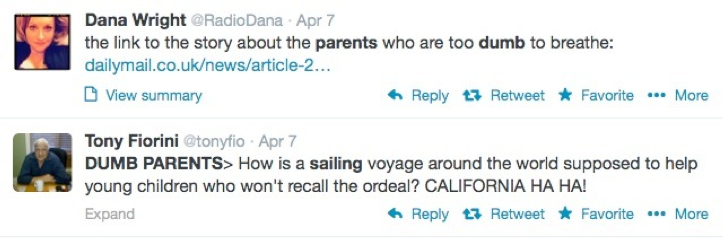
4) Judgment Day is Everyday
The media have also substituted real news with social media comments from people who judge other people. A perfect example is the condemnation after the U.S. Navy rescued a family from their sinking sailboat on April 6, 2014. The parents had a small child on board and social media lit up with mean comments, which made up a huge part of the news coverage.
5) Pretend In-Depth Coverage
CNN looked foolish with their all-in attempt to cover the Malaysia 370 plane disappearance. Non-stop coverage of a single issue means fewer employees are needed than if your network covered a variety of issues affecting the lives of viewers.
6) Fake Breaking News
Combined with the pretend in-depth coverage is fake breaking news. The television media have a need to put up a banner across the screen each time they learn one new detail, regardless of how silly it is.


Among the many crazy things that CNN called “breaking news” in the Malaysia 370 story, is first breaking the news that the final words from the crew were, “Alright, good night.” The next day it was “breaking news” that the final words were, “Good night Malaysia three seven zero.”
Really CNN? In my time as a journalist we would have called that an error and a correction.
Statistics provided by IQ Media show that in the past three years, there has been a monumental jump in the number of times the phrase “breaking news” is said on television broadcasts.

Solutions to Media Changes
Among the many solutions we discussed, is the need to recognize that in the future, the media will expect you to provide video from any crisis experienced by your company, as well as a narrative. They will expect you to do a selfie style video directly from the scene.
Such videos are hard to do and require training and practice. While the interactive portion of our workshop taught some of the basic skills, the online 23-part tutorial will teach you even more.
Tutorial #9 by Gerard Braud —
This tutorial is part of a series of articles posted in the month of June that explain how to be a good iReporter and how to make CNN iReports, or smartphone videos a vital part of your crisis communication and media relations strategy. The tutorials are more relevant than ever in the month of June due to hurricane season. Make sure to plan and practice what to say in your videos on a clear sunny day, in order to be prepared on your darkest day. In this particular tutorial, I walk you through the steps of what to say on video and directly to the media in regards to your crisis.

Click image to watch video
Talking is easy, but saying the right thing is hard. Media training classes often expose who talks too much and says the wrong things and who knows how to practice and choose their words carefully.
Unlike a normal media interview, in which you might be asked hard questions or face the wrath of someone who edits your statements, when you file an iReport you, your mouth and your video are your first line of editing. You are shooting a short video and do-overs are allowed if you say the wrong thing or mess up — that’s the good news. The bad news is, if you are not careful you will be too critical of what you say and keep doing do-overs.
What to say? My first day in Journalism School at Louisiana Tech, we were taught that reporters always want to know the same 6 questions:
1) Who?
2) What?
3) When?
4) Where?
5) Why?
6) How? or How Much?
You can watch my iReports and analyze what I say. During my Hurricane Isaac videos in 2013, most of the time I start by saying, “This is Gerard Braud in Mandeville, Louisiana. Today is (give date) and the time is (give time). Hurricane Isaac is coming ashore. Winds are (give details). So far we’ve had xx inches of rain.” I then narrate what is most news worthy at that moment.
If you break down my first :15 seconds, it goes like this:
1) Who? – Gerard Braud
2) What? – Hurricane Isaac
3) When? – Date and time given
4) Where? – Mandeville, LA
5) Why? – Explain what is news worthy
6) How? or How Much? – Rain and wind updates
My narration of what is most news worthy begins with a major statement that is designed to serve as a headline or summation of what I am about to share. In journalism, we call this the inverted pyramid. You begin broad and you built to the details. Think of a traditional newspaper, which has a headline at the top, then a summary statement, then more details.
With that in mind, my report may go on to say, “At his time, flood waters have overtopped the sea wall and there are now white caps rolling down my driveway. The waves are beginning to cause damage to my storage area and tool shed. There is a good chance my tool shed will wash away.”
A dissection of that statement would go like this:
1) Headline: Flooding
2) Broad detail: White caps
3) More details: Tool shed washing away
I like to call my style of iReporting a 1-2-3 A-B-C approach. In
other words, if “A” happens, then “B” will be the next thing to happen, then “C” happens. Hence:
A) Flooding
B) White caps
3) Damage from waves
The biggest mistake you can make is to give too many details, followed by talking too long. Look at it this way: When you read a story in the newspaper, do you read the entire article and value the details at the end of the story, or do you generally read the headline and the summation sentence, then move on? Most people never read the entire story. Here is another test: When you watch an online or YouTube video, how long do you watch before you get tired of it? When you watch video online, do you watch for deep information or do you primarily watch for entertainment?
This entire process is easy and intuitive for me because I started learning all of this in 1976. I did it everyday as a television reporter for 15 years, through a career with an enormous number of live reports.
But if you haven’t done this a lot and if this does not come natural to you, then you must practice, practice, practice.
You cannot and will not be instantly successful on your first try. You’ll be even worse if you are trying to do this for the first time in a middle of a crisis.
In many respects, your training needs to combine some media training skills and a significant amount of video production skills. In some cases you may have someone shooting the video for you with a video camera or smart device. In my iReports, I am the videographer using an iPhone or iPad.
This means I have to consider how the shot is framed, manage audio issues, manage lighting, and manage movement. We’ll look at all of these issues in upcoming articles.
If you need help with your training or if you would like to have this content shared as part of a workshop or conference presentation, please contact me at gerard@braudcommunications.com
This PDF gives you more information about the available programs.
Tutorial #8 by Gerard Braud —
As mentioned in all my tutorials this month, my goal for you, if you are a spokesperson, public relations expert, or Public Information Officer (PIO) for a government agency, is to make iReports part of your crisis communication and media relations plan. Now I’m asking you to think in terms of telling compare and contrast stories, especially during hurricane season or your natural disaster. Here is why:
 Think about when you watch television news. If there is a natural disaster, in order for you to appreciate the magnitude of the disaster, don’t you really need to know what things looked like before the disaster?
The best stories are told when the audience can see before, during and after an event.
I want this to always be your goal when you file your CNN iReports. This means not just filing one report, but filing several.
Watch today’s video tutorial to learn more.
During Hurricane Isaac in 2012, as it impacted my home in Mandeville, Louisiana, 30 miles north of New Orleans, I filed CNN iReports for five days.
My first report was on a clear sunny afternoon, as I told the audience how Lake Pontchartrain would flood portions of the community. You can watch that original video here.
The next day, I filed several more iReports as the storm moved in, and specifically, as Lake Pontchartrain caused flooding, just as I had predicted in the previous video.
Over the next 24 hours I continued to file reports showing the progress of the storm.
As flood waters receded, I filed reports about the damage, cleanup and aftermath.
The audience was able to compare what was to what is.
This link will take you to my tutorials on the CNN iReporter website. I hope you take the time to view, study, and share all 23 videos and articles.
This link will take you to the index for all of the articles and videos.
If you, like many others, think this information would be valuable as a workshop at a conference or corporate meeting, please call me at 985-624-9976. You can also download a PDF that outlines the program, Social Media iReports.pdf so you can share it with your meeting planner or training manager.
Tutorial #7 by Gerard Braud —
This month when you visit this blog, you will learn secrets about how and why you should be crazy about iReports and using smart phones and tablets to broadcast to the world. In this blog in particular, you can learn how you can be the source of breaking news during hurricane season, during a natural disaster, or any of the crises you face. You can be the official spokesperson to the media on behalf of your organization, rather than speculating eyewitnesses on the street.

Click to watch video
Out of all of the people that CNN could put on television, why would they pick you? What can you share that is newsworthy?
This is an important question to ask. The answer may be easier to understand when I explain how and why I became the guy who was broadcasting live from my front porch during Hurricane Isaac in 2012.
Over the next few days you will learn the background story of how I was selected by CNN.
With 7 feet of floodwater surrounding my home and no electricity for 5 days during Hurricane Isaac, I was able to broadcast live to CNN using only my iPhone, G3 and Skype. Amid the rain, heat, waves, snakes, alligators, debris and dead animal carcasses, I kept broadcasting.
Because of the reports I filed from August 26-September 2, 2012, CNN producers chose my reports out of all the reports filed by 11,000 iReporters in 2012, to be recognized for continuing coverage of breaking news. The reports were seen both on the CNN iReport website and they were broadcast by CNN and HLN to viewers around the world.
These reports took viewers into places that even CNN news crews couldn’t reach with their million dollar satellite trucks and $60,000 HD cameras.
I have been a CNN iReport evangelist since the program began. During 4 major weather events my iReports have been broadcast on CNN and on multiple occasions have lead to live broadcasts.
The first time was when I witnessed a funnel cloud during Hurricane Gilbert. I simply uploaded a short video with no narration to iReports. CNN showed it, then my phone range. A friend in California called to warn me there were tornadoes near me and he had just seen it on CNN. Ha. Funny how that worked.
 On December 11, 2010 we had an unusual 5 inch snow fall in the town I live in, near New Orleans. I had not sent out Christmas cards yet, so with my point and shoot camera I produced a short news video about the snow, then wished everyone Merry Christmas. I uploaded the video to iReports. Their producers vetted the report and confirmed it was real. They edited off my Christmas greeting, then used the rest of the video all day long to run before every weather report. That was really cool.
CNN asked me to do a live report via Skype, but that got canceled because of breaking news. That was the day the body of Caylee Anthony was found in the woods, leading to the murder trial of the child’s mother, Casey Anthony.

Click image to watch video
In August of 2011, Tropical Storm Lee came through New Orleans and my little town of Mandeville, LA. A week before, I had moved into a new house on the shore of Lake Pontchartrain. The storm surge filled my yard with 5 feet of water. Using my iPad and Wi-Fi, I shot a 90 second news report, then uploaded it to iReports. Within minutes, producers were asking me to do live reports. So with an iPad as my broadcast camera and Wi-Fi as my broadcast channel, I was on the air for 2 days.
These 3 events set the stage for Hurricane Isaac in August 2012 and the series of reports for which I was nominated. You will learn more details in our next article.
This link will take you to my tutorials on the CNN iReporter website. I hope you take the time to view, study, and share all 23 videos and articles.
This link will take you to the index for all of the articles and videos.
If you, like many others, think this information would be valuable as a workshop at a conference or corporate meeting, please call me at 985-624-9976. You can also download a PDF that outlines the program: Social Media iReports.pdf, so you can share it with your meeting planner or training manager.
Tutorial #6 by CNN iReporter Evangelist Gerard Braud —

Click image to watch video
In order to shoot your own videos to tell the story of your crisis, it is crucial that you have the right technology. Having the right crisis communications tools will help you communicate quickly and effectively to your audiences on your darkest day, whether your organization faces a hurricane, tornado, or a smoldering crisis.
As an iReport Evangelist, my favorite 2 iReport tools are my iPhone and my iPad. These are my favorite crisis communications tools as well.
You are welcome to use any brand of phone or tablet you like, as long as you can
1) Take video of yourself with it
2) Upload that video to the Internet.
Getting to the internet means you either need a reliable Wi-Fi signal or a good G3 or G4 signal on your device.
Raw video, also known in the news business as B-roll, is one type of image you can send to iReports. They also accept still photos. However, my favorite approach is to do a traditional television news style reporter standup. Standup is the TV term for the reporter walking and talking on camera.
 Some early generations of smart phones only allow you to use your phone screen as a video view-finder while you take a picture or video of something in front of you. Ideally, you want a smart phone or tablet that has a two-way camera — the one that allows you to hold your tablet or phone at arms length while you see yourself on the screen.
Your goal in the standup should be to make it short – usually 38 seconds. The short length makes it easy and fast to upload. Sometimes longer videos will not upload because of a lack of bandwidth, especially during a crisis or during bad weather. When doing a standup, your goal should also be to walk, talk and provide information in a quotable nugget, just as you will learn if you have ever been through a media training class. Because of this technology and demand, I’ve changed the way I teach media training classes to teach spokespeople how to walk and talk and deliver great information in a quick nugget. As you deliver your standup, you must also speak in a conversational tone and not in a stiff, rehearsed sounding voice.
Because my goal is to convert my iReports into Live interviews, I also have the right software. Skype on my iPhone and iPad, connected to the web, becomes my source for broadcasting Live. This means that you need to set up a Skype account on a clear sunny day, before you ever actually need it. Just like any other technology, you have to practice using it in order to get it right when you need it quickly in a crisis.
When I report Live for CNN, I’m asked to call one of their many Skype numbers. When I report Live for The Weather Channel, they phone my Skype number.
 The iPad is my favorite out of my 2 devices, because I love the size of the screen and the quality of the camera. However, it is heavier and harder to hold. Some iPad cases make it easier. Several companies also make iPad tripod devices. While a tripod provides a steady image, the downside is that you are unable to walk and talk to tell your story. In rainy conditions, the iPhone is easier to keep dry. You can use a baggie with a hole cut in it for the camera.
In our next article, you will learn what types of stories get the best attention.
If you have questions, tweet me @gbraud or send an e-mail to gerard@braudcommunications.com
Tutorial #5 By CNN iReporter Evangelist Gerard Braud —
So far this month, we have reviewed why you should be a CNN iReporter, or at the very least why you should learn to effectively shoot your own smartphone videos. We have learned how to set up your CNN iReporter account and how to determine what is newsworthy and what isn’t. Now it is time to learn exactly how to effectively communicate through video on your darkest, stormiest day. Here are a few lessons for telling the story of your organization’s crisis, ranging from natural disasters to tragic events like workplace shootings. As with our previous lessons, this one is also based on my video documentation of Hurricane Isaac in 2012. Enjoy!

Click here to watch video
It is important to evacuate when an approaching hurricane is going to be a bad one. Staying in your home in destructive winds and killer flooding is dumb. Hurricane Isaac was not a strong storm and mandatory evacuations were not called. So, I decided to stay in my home on the shore of Lake Pontchartrain in Mandeville, LA, which is 30 minutes north of New Orleans. The storm winds at the eye of the hurricane were just over 75 miles per hour, making it barely a Category 1 hurricane. The eye was forecast to pass 50 miles to the west of me, which meant the winds would not be destructive where I was. The path would push water from the Gulf of Mexico into Lake Pontchartrain, resulting in localized flooding from storm surge.
As an experienced storm chaser, my goal was to document the hurricane, from the preparation stage, through the flooding, then through the aftermath and cleanup.
My home is a small cottage, raised on steel 10-foot pilings, with steel beams. Below my house is a carport and storage area that is 5 feet above sea level. That places the floor of my living quarters 15 feet above sea level and makes for a great perch to view mother nature. The storage area is constructed with mandatory breakaway walls, which will wash away in a storm, and they did.
Two days before the hurricane I began to document the flurry of activities and preparations in the community. There were long lines at the gas stations until every pump ran dry. I documented empty grocery store shelves, as water and canned goods were snatched up. At the hardware store I documented long lines as people purchased electrical generators and filled propane tanks.
On Tuesday, August 28, 2012, the evening before the storm made landfall, I filed an iReport that showed a calm lake, a green parkway and the green grass in my yard. I explained to viewers that the next day the entire area would be underwater, which all came to pass and made for a great follow up report. That was the iReport that lead CNN Headline News (HLN) producers to ask me to do a live report on Evening Express as the hurricane made landfall on August 29. By then, electrical power had gone out and I was broadcasting live using my iPhone 4, a G3 phone signal, and Skype
 The big surprise with Hurricane Isaac was that the storm stalled and stayed in the same place for nearly 2 days, all the while causing the floodwaters to get higher. A fast moving storm would have come and gone in 12 hours. This one would cause flooding from Tuesday until Sunday.
By the time we hit the air live on Evening Express on the evening of August 29, there were whitecaps rolling down my driveway. After dark I did a live report for the Dr. Drew Show. Shortly after I signed off with Dr. Drew around 9 p.m., I began to hear strange creaking noises in the house. Occasionally there were unnerving vibrations. When I turned on the faucet there was no water. This wasn’t good. #understatement. I grabbed a flashlight and walked downstairs, where I could see that the breakaway walls in the storage areas on my carport began to wash out. As they did, debris in the waves broke the water supply, leaving me without running water. Then I realized that near the water pipes were natural gas lines. #causeforconcern
I phoned a neighbor and asked if I could sleep at his house just in case mine had a gas leak. I shut off all of my pilot lights, blew out all of my hurricane lanterns and candles, grabbed my life vest and paddled my canoe to his house. By this time, the water was so deep I simply paddled over my fence.
Overnight, the eye of the storm began to move again. The morning of August 30th I paddled home to find there was no gas leak, so I filed more iReports showing the damage as the water level dropped some.
I was surprised at how much debris had washed into my yard. Then nature revealed unwanted guests. First, there were 10 alligators swimming in my yard. As it got warm, dead nutria, a large swamp rat the size of a large muskrat, began popping up out of the water. I counted 50 carcasses. As the water drained off further, it revealed a blanket of swamp grass 12-24 inches deep, filled with thousands of snakes. I felt like I was in an Indiana Jones movie. Such anomalies mean just one thing: file more iReports and do more live reports for Evening Express and Dr. Drew.
For me, the beauty of iReports is the ability of ordinary people to take their stories right to the world’s leading news network. News happens fast and there isn’t always a professional news crew present to capture it. A citizen with an iPhone can capture and report the news even when no news crews are around.
What people who work in public relations need to be aware of is that you too, have the ability to be an iReporter. If you fail to do so, your story will be told by a citizen on the street, who may have great pictures, but not always the correct information. This is true for all spokespeople. This is true for Public Information Officers (PIO).
Who will tell your story? You or someone else?
This link will take you to my tutorials on the CNN iReporter website. I hope you take the time to view, study, and share all 23 videos and articles.
This link will take you to the index for all of the articles and videos.
I would be honored to teach you the specifics of iReports as a conference presentation or as a private training program. Download this PDF which describes the program, Social Media iReports.pdf, then call me.