Crisis communication resources to help you protect your revenue, reputation, and brand.
Effective crisis communications when “it” hits the fan.

Our blog is filled with deep resources to help with your crisis communication needs. Whether you are writing a crisis communication plan, seeking the best media training tips, or digging for case studies on crisis situations, you’ll find it here. Our goal is to give you all of the public relations resources you need to protect your revenue, reputation, and brand.
For those of you who love DIY and taking on a challenge, we’ve worked really hard to give you a good road map to follow. However, sometimes the fastest option is to bring in a pro. If that’s the case, we’re fully vaccinated and we’re ready to meet your needs, anywhere and anytime.
If you need help with your crisis communications plan, we’re ready to help.
When you need media training for your spokespeople, give us a call.
Anytime your organization needs a great keynote for your conference, we’d value the opportunity to serve you.
We invite you to:

By Gerard Braud, CSP, Fellow IEC

Click image to watch video
Rural electric cooperatives are facing a crisis. Distrust of co-op boards and directors is increasing. Negative news stories and protests across the country are on the rise.
Will this affect you? Should you be concerned?
You may be doing everything perfectly, legally, and ethically – but you could still face a crisis caused by distrust and guilt by association. Your members may question board members at public events or at the co-op’s annual meeting. Angry members may launch a negative Facebook campaign and they may sow the seeds of doubt with your local media, who will then launch an investigation.
What should you do?
Watch this video to learn more about the 5 Steps to Effective Crisis Communications.
You can also learn more about best practices in public relations and crisis communications by using this link to get access to a special 5-part video series on the 5 Steps to Effective Crisis Communications.
To see what other cooperatives are experiencing, use the links below. Accusations involve allegations of excessive per diem and compensation as outlined on your co-op’s Form 990 that you submit to the IRS. Regulators and protesters are asserting that directors are “spending too much money attending conferences in fancy hotels while eating steak dinners.” This may not actually be true for you and your board of directors, but that will not stop inquiries and protests. CEOs & general managers are losing their jobs. Board members and directors are being voted out.
I spent 15 years as a television reporter and reported on electric cooperatives. For the past 20 years I’ve worked with electric cooperatives across America helping them communicate more effectively and navigate difficult situations. I’d be honored to help you as well.
For immediate help, phone me at 985-624-9976 or send an email to Gerard@BraudCommunications.com
Problems at a Cooperative in Georgia
https://www.wctv.tv/content/news/Members-protest-Grady-EMC-489803831.html
https://www.wctv.tv/content/news/Grady-EMC-president-and-CEO-resigns-490804991.html
https://www.facebook.com/permalink.php?story_fbid=2064746816871622&id=1080800375266276&__tn__=K-R
Accusations by the Louisiana Public Service Commission
Bold steps taken by one Louisiana Cooperative
Problems in Oklahoma
Video being shown to various community groups at community meetings:
https://www.youtube.com/watch?v=3Q6FTR1fYXQ
Article from Oklahoma where wrongdoing was involved
https://newsok.com/article/5557107/former-regent-sentenced-in-corporate-fraud-
Problems in South Carolina
https://www.thestate.com/news/politics-government/article216222990.html
Potential problems in Alabama
This group has made posts on Twitter and Facebook about Joe Wheeler’s board pay and the replacement of a deceased board member with his wife.
An example of an opposition group called “We Own It.”
https://weown.it/content/founder-message
Crisis communications and media training expert Gerard Braud, CSP, Fellow IEC is based in New Orleans. Organizations on five continents have relied on him to write their crisis communications plans and to train their spokespeople. He is the author of “Don’t Talk to the Media Until…”
More crisis communications articles:
3 Lessons the Melania Trump Coat Can Teach All Public Relations People
The Biggest Lie in Crisis Communications
4 Steps Every Company Needs to Take in Order to Avoid the Default Spokesperson
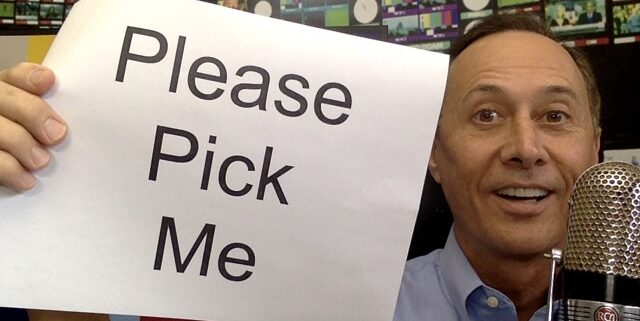
By Gerard Braud, CSP, Fellow IEC
Your spokespeople need media training and I’d like to be your media trainer. There. I said it. I’m asking you to please consider me.
Below are three reasons why my training can offer you techniques that other trainers don’t offer. Plus – if you book your training in November and December 2018, I’ll let you add one extra person to the media training class at no extra charge. Many of you have money in your budget that you either have to spend or you will lose it. So act fast to get your training on the calendar now.
To make the case of why you and your spokespeople can achieve greater results from my media training programs, here are three things to consider.
I’ve adjusted my training to coincide with how people read news on their mobile devices. PEW Research says 85% of older adults read their news on a mobile device. Most people will tell you they only read the headline, the first paragraph, and the first quote, before they move onto something else. In other words, their perception about the news story that might involve your organization is derived from the headline, the lead sentence, and the quote. That is one of my primary points of focus, because it is the essence of a reporter’s inverted pyramid writing style.
More then 15 years ago I pioneered the preamble technique. Initially the preamble was developed to add context to a media interview. Because most reporters ask direct questions and most spokespeople try to respond with a direct answer, often the answer is taken out of context because the spokesperson is never taught to add context. A well-worded, profound, overarching sentence, spoken by the spokesperson as a preamble to their first answer provides context.
As this preamble technique has evolved, an increasing number of reporters are using the preamble to make up the essence of their lead sentence. And if you know anything about the newsroom, you know that the headline is written by a copy-editor who reads the lead. Hence, if your preamble controls the lead, then your preamble also controls the headline. If you control both of these, you control the perception of the mobile device reader and you control the edit of the news story.
A compelling quote compels a good reporter to put the quote in their news report, as well as to use it early in their report. I promise you that I can help your spokespeople land some amazing quotes. Preamble + Quote = Controlling the edit + Controlling the perception.
Time for a change?
Most media trainers are still teaching spokespeople to focus on three bullet points as their key messages, which leads to bad ad-libs. Most trainers are teaching bad techniques such as telling people to only talk about what you want to talk about, combined with bad avoidance techniques, bad pivots, and bad spin. Guess what? The audience is wise to this and rejects it, just as the media are wise to this and reject it.
What might have worked in the past doesn’t work today. Times are changing. Are you changing with the times? Is your media trainer changing with the times?
If you love your media trainer, please stay with them. If it is time to hire your first media trainer or change to a new media trainer, it would be my honor to talk with you. Please phone me at 985-624-9976 or email me at Gerard@BraudCommunications.com
And remember, if you book in November or December of 2018, when you book a class for four spokespeople I will let you add a fifth person at no additional charge.
Thank you for your consideration.
Crisis communications and media training expert Gerard Braud, CSP, Fellow IEC is based in New Orleans. Organizations on five continents have relied on him to write their crisis communications plans and to train their spokespeople. He is the author of “Don’t Talk to the Media Until…”
More crisis communications articles:
3 Lessons the Melania Trump Coat Can Teach All Public Relations People
The Biggest Lie in Crisis Communications
4 Steps Every Company Needs to Take in Order to Avoid the Default Spokesperson

It’s been said that “If you fail to plan, then you should plan to fail.”
Sadly, most brands and companies lack best practices in crisis communications and lack the know-how to write a crisis communication plan. Hence, generally, organizations are reactive, rather than pro-active.
This FREE 5-part video series is a perfect way to put you on the road to strategic crisis communication planning. Plus, you’ll get a chance to schedule a free, private 15-minute phone call to discuss your challenges.
Whether you are in emergency management, business continuity planning (BCP), disaster recovery, HSE, or public relations, this 5-part strategy for effective crisis communications will help protect lives, protect reputation, and protect revenue.
Watch the video for more details on this series and then sign up today!
Crisis communications and media training expert Gerard Braud, CSP, Fellow IEC is based in New Orleans. Organizations on five continents have relied on him to write their crisis communications plans and to train their spokespeople. He is the author of “Don’t Talk to the Media Until…”
More crisis communications articles:
3 Lessons the Melania Trump Coat Can Teach All Public Relations People
The Biggest Lie in Crisis Communications
4 Steps Every Company Needs to Take in Order to Avoid the Default Spokesperson
 1) Too many people in public relations fail to ask for help when they need it.
There are many sources for expert help and advice. There are great professional organizations like the Public Relations Society of America (PRSA), the International Association of Business Communicators (IABC), the Canadian Public Relations Society (CPRA), and the Southern Public Relations Association (SPRF).
Many members of these associations are willing to pick up the phone for free to answer a simple question. If most don’t know the answer to your question, they’ll gladly refer you to a colleague who is an expert. You could even give them a shout on social media.
2) Public relations folks cause greater problems for themselves by trying to tackle tasks that they are not good at or for which they have no professional passion.
In my own career, my passion for dealing with the media and crisis communications lead me to develop a niche’, rather than opening a full-service PR agency. If I need other aspects of PR, I call other experts who have PR agencies in New Orleans, New York, Toronto or other cities around the world.
Trying to do what you don’t know how to do is noble. Trying, learning, and achieving great things are commendable. But reaching beyond your capabilities often leads to failure, which then leads to you being further undervalued by your employer. Sometimes you get fired when the failure is too big. Often the difference between success and failure is simply asking for professional help.
And based on the personality type, you need to realize that most of your employers do not understand your craft or your profession. They think it is easy. Business leaders think you can work miracles. CEOs expect you to create magic on a shoestring budget. And often you do create magic with no budget and it feels great when you do. But when you do, you reinforce the notion of every CFO that you don’t need a bigger budget to do what you do. In reality, often you need to push back and say, “No, we need an outside expert to help us with that because the value of success is important and a potential failure would be more costly.”
Some of you are blessed to be in organizations with a huge PR team with experts in many areas of social media, internal communications, employee engagement, corporate social responsibility, and media relations. Many of you wear too many hats and do it all by yourself, including marketing, branding, advertising, and customer service.
3) Public relations folks often wear too many hats and do it all by themselves, including marketing, branding, advertising, and customer service.
Before you reach too far and fail, consider picking up the phone and reaching out to a professional colleague to ask for advice, help, and mentorship.
Crisis communications and media training expert Gerard Braud, CSP, Fellow IEC is based in New Orleans. Organizations on five continents have relied on him to write their crisis communications plans and to train their spokespeople. He is the author of “Don’t Talk to the Media Until…”
More crisis communications articles:
3 Lessons the Melania Trump Coat Can Teach All Public Relations People
The Biggest Lie in Crisis Communications
4 Steps Every Company Needs to Take in Order to Avoid the Default Spokesperson
 By Gerard Braud
Prepare for your crisis on a clear sunny day. Your darkest day is the worst day to deal with a crisis.
So, how do you do that? With a Crisis Communications Drill.
A Crisis Communications Drill can simulate realistic emotions and pressures in a controlled environment, where you can mess up in private, rather than messing up during a real crisis.
Your goal in every Crisis Communications Drill should be to test multiple aspects of the organization. These are the seven most important things I test in the drills for my clients:
1) Is there a properly written Crisis Communications Plan that is so thorough that it can be read during the drill, word-for-word, in real time? Does it ultimately result in flawless performance by the Crisis Communications Team?
2) Did that Crisis Communications Plan allow the organization to begin issuing news releases, postings to the web, texts, and e-mails to employees within one hour or less of the onset of the crisis?
3) Did executives within the organization slow down the communications process by excessively word-smithing news releases?
4) Did the Crisis Communications Plan have pre-written news releases that were pre-approved on a clear sunny day by the executive team, so they could be released quickly without re-writes?
5) Are their multiple spokespeople who are qualified to stand before my mock media and survive their questioning?
6) Did misguided egotists step out of their assigned roles and try to take over other people’s jobs? Did they withhold information that kept others from properly doing their jobs, thereby compromising the organization in its crisis response?
7) Did the drill create enough realistic drama and anxiety, to add a level of fear into all participating teams? Did it help them realize drills and media training must be treated like an athlete treats their sport? Did it help them understand that regular practice on a clear sunny day makes you your best on your worst day?
If your drill covers all of these bases, you are on your way towards effective crisis communications. You are not done, however, because crisis drills must be practiced multiple times throughout the year.
Crisis communications and media training expert Gerard Braud, CSP, Fellow IEC is based in New Orleans. Organizations on five continents have relied on him to write their crisis communications plans and to train their spokespeople. He is the author of “Don’t Talk to the Media Until…”
More crisis communications articles:
3 Lessons the Melania Trump Coat Can Teach All Public Relations People
The Biggest Lie in Crisis Communications
4 Steps Every Company Needs to Take in Order to Avoid the Default Spokesperson

By Gerard Braud 
Many crisis communication experts have one goal – they want YOU to have a crisis so that you call THEM to repair your reputation so that THEY make a lot of money.
That is such Bull$&*t.
But then again, that’s why I am a maverick and a contrarian when it comes to crisis communications. That’s also why I’m giving you The 5 Steps to Effective Crisis Communications.
With that said, let me DARE YOU. I dare you, within the next week… or even within the next 30 days, to take one step to examine your crisis communications strategy.
To get you started, I’m giving you a 5-part video series on The 5 Steps to Effective Crisis Communications. In it, you will learn actionable best practices in crisis communications.
Want to know what the catch is?
1) I want YOU to NOT have a crisis.
2) I want YOU to have the best crisis communication plan possible, so that you can recognize a potential crisis early, and either eliminate the crisis or prepare to respond to the crisis.
3) I want YOU to have your own toolkit that allows you to communicate quickly, so that you control the narrative, rather than having the narrative defined by rumors on social media.
Each video is only eight to ten minutes long, so you can quickly steal time each day to watch them five days in a row. I dare you to commit to watch all five. That means you will get 50 to 60 minutes of the content I share when I’m delivering keynote presentations to various associations around the world.
And the choice is yours – after each lesson you can ask me questions or you can watch all five and then schedule a call to ask questions.
And the choice is yours – you can take all five steps or you can take my dare to do just one.
And the choice is yours – you can be a do-it-yourselfer DIY style and use my lessons as your outline for success, or you can ask me about some of my turnkey options that will have you up and running in one to two days.
The choice is yours. I dare you to get started.