Earlier this week we asked corporate communicators and PR professionals, “What role should your internal communications team play during a crisis?” Your colleagues have commented on the BraudCast You Tube Channel, here on the blog, and on social media. Listen to their thoughts in the video below. Make sure to subscribe to the weekly question on the BraudCast YouTube Channel to participate each week.
Click image to watch and subscribe to the BraudCast
This question is one of a series of discussion questions about media relations, crisis communications, public relations, and social media. Yes, YOU are invited to share your bite size bits of best practices each week. Here is how:
Step 2: You will see a short video that poses a new question every Monday. You then post your best practices and observations on The BraudCast YouTube channel.
3: Once your opinion is shared, you can follow the discussion online so you can compare your best practices to those of your professional colleagues.
Step 4: Watch the Follow up Friday Video where you will see a short YouTube video outlining some of the most interesting observations. Yes…your comments may actually show up on our BraudCast video, bringing you world-wide fame, fortune, a big raise, glory, street parades, and more.
https://braudcommunications.com/wp-content/uploads/2020/12/Logo-white-01-300x138.png00gbraudhttps://braudcommunications.com/wp-content/uploads/2020/12/Logo-white-01-300x138.pnggbraud2016-02-25 08:52:102021-05-20 00:15:19Your answers: What role should your internal communications team play during a crisis?
This week we are asking, “What role should your internal communications team play during a crisis?” Each week we seek your best corporate communications and crisis communications practices on the BraudCast. If your organization doesn’t have an internal communications team and that team is you, what role do you play? Comment here and on social media and subscribe to the weekly question on the BraudCast YouTube Channel to participate each week.
Click image to watch and subscribe to the BraudCast
This question is one of a series of discussion questions about media relations, crisis communications, public relations, and social media. Yes, YOU are invited to share your bite size bits of best practices each week. Here is how:
Step 2: You will see a short video that poses a new question every Monday. You then post your best practices and observations on The BraudCast YouTube channel.
3: Once your opinion is shared, you can follow the discussion online so you can compare your best practices to those of your professional colleagues.
Step 4: Watch the Follow up Friday Video where you will see a short YouTube video outlining some of the most interesting observations. Yes…your comments may actually show up on our BraudCast video, bringing you world-wide fame, fortune, a big raise, glory, street parades, and more.
https://braudcommunications.com/wp-content/uploads/2020/12/Logo-white-01-300x138.png00gbraudhttps://braudcommunications.com/wp-content/uploads/2020/12/Logo-white-01-300x138.pnggbraud2016-02-22 08:10:382021-05-20 00:15:37What role should your internal communications team play during a crisis?
Our question for discussion this week is “Are news releases dead?” Corporate communications and public relations professionals may have various opinions on this topic regarding the best way to communicate effectively to their audiences and the media. Please comment and subscribe here to the weekly question, as well as view your colleague’s answers in my follow up video later this week.
Click image to watch
This question is one of a series of debates in the media relations, crisis communications, public relations, and social media industries where you and your colleagues can share observations with each other. Yes, YOU are invited to share your bite size bits of best practices. Here is how:
Step 2: You will see a short video that poses a new question every Monday. You then post your best practices and observations on The BraudCast YouTube channel.
3: Once your opinion is shared, you can follow the discussion online so you can compare your best practices to those of your professional colleagues.
Step 4: Watch the Follow up Friday Video where you will see a short YouTube video outlining some of the most interesting observations. Yes…your comments may actually show up on our BraudCast video, bringing you world-wide fame, fortune, a big raise, glory, street parades, and more.
This week I am asking public relations and media relations professionals for their best advice for talking to a spokesperson after they have screwed up in a media interview. That’s right, an awkward and uncomfortable discussion to have. Make sure to comment and subscribe here to the weekly question, as well as view your colleague’s answers in my follow up video later this week.
Click image to watch
This question is one of a series of debates in the media relations, crisis communications, public relations, and social media industries where you and your colleagues can share observations with each other. Yes, YOU are invited to share your bite size bits of best practices. Here is how:
Step 2: You will see a short video that poses a new question every Monday. You then post your best practices and observations on The BraudCast YouTube channel.
3: Once your opinion is shared, you can follow the discussion online so you can compare your best practices to those of your professional colleagues.
Step 4: Watch the Follow up Friday Video where you will see a short YouTube video outlining some of the most interesting observations. Yes…your comments may actually show up on our BraudCast video, bringing you world-wide fame, fortune, a big raise, glory, street parades, and more.
https://braudcommunications.com/wp-content/uploads/2020/12/Logo-white-01-300x138.png00gbraudhttps://braudcommunications.com/wp-content/uploads/2020/12/Logo-white-01-300x138.pnggbraud2016-02-01 11:43:082021-05-20 00:22:11How do you talk to your spokesperson after they’ve screwed up in a media interview?
Each week we seek your best public relations practices on the BraudCast. Your discussion question this week is, “What is your best tip for writing great quotes for news releases?” As a corporate writer or public relations professional, capturing the attention of your audience and writing effective news releases is not an easy task. That is why I am asking you to contribute by sharing your best advice with your colleagues.
Click image to watch and subscribe to The BraudCast
This question is one of a series of discussion questions about media relations, crisis communications, public relations, and social media. Yes, YOU are invited to share your bite size bits of best practices each week. Here is how:
Step 2: You will see a short video that poses a new question every Monday. You then post your best practices and observations on The BraudCast YouTube channel.
3: Once your opinion is shared, you can follow the discussion online so you can compare your best practices to those of your professional colleagues.
Step 4: Watch the Follow up Friday Video where you will see a short YouTube video outlining some of the most interesting observations. Yes…your comments may actually show up on our BraudCast video, bringing you world-wide fame, fortune, a big raise, glory, street parades, and more.
https://braudcommunications.com/wp-content/uploads/2020/12/Logo-white-01-300x138.png00gbraudhttps://braudcommunications.com/wp-content/uploads/2020/12/Logo-white-01-300x138.pnggbraud2016-01-25 10:13:352021-05-20 00:26:59What is your best tip for writing great quotes for news releases?
Delivering the closing keynote for IABC Calgary. Taking off my pants to prove a point about the LuLu Lemon crisis of yoga pants wearing thin on the inner thighs.
As a keynote speaker at the IABC Canada-West Region Conference, I was asked to do a podcast discussing crisis communications lessons for public relations and communications professionals. Vice President of IABC Calgary, Will Tigley interviews me to talk about crucial communications issues in today’s industry.
Here were a few of the major crisis communications planning aspects to consider that were discussed in the podcast:
First, the need for speed is one of the greatest issues in the industry. With the speed of Twitter and all social media, there is no longer time to wait multiple hours discussing semantics of a press release. The key to speed is pre-written news releases. Put the systems in place on a clear sunny day so that when your darkest day comes, you are prepared.
Will Tigley asked, “How do you go from being good at crisis communications to great at crisis communications?” You must have a robust crisis communications plan with pre-written news releases. You must practice in private, media train your spokespeople at least once a year, and act out realistic, high-chaos, yearly crisis communications drills.
Another aspect to consider in crisis communications planning includes conducting vulnerability assessments. This means walking throughout your organization, interviewing employees, and conducting meetings to determine everything that could ever possibly go wrong. Categories range from white-collar crimes, to hurricanes, to violence, explosions and even social media crises. Again, these crises are remedied with a simple, yet thorough crisis communications plan, as well as pre-written news releases for each scenario.
If there is one thing to walk away with when leaving the IABC Calgary Conference, or any conference in the future, do not file away your stack of notes. A dream without a deadline is still just a dream. Narrow your list, prioritize it, and set a date to follow through with these crucial crisis communications strategies.
Some public relations professionals and corporate communicators argue that the CEO should always be the spokesperson for effective communications, while others say it should be a public relations professional. When is it appropriate for the CEO to be the corporate spokesperson? Please share your opinion with us.
Click image to watch
This question is one of a series of debates in the media relations, crisis communications, public relations, and social media industries where you and your colleagues can share observations with each other. Yes, YOU are invited to share your bite size bits of best practices. Here is how:
Step 2: You will see a short video that poses a new question every Monday. You then post your best practices and observations on The BraudCast YouTube channel.
3: Once your opinion is shared, you can follow the discussion online so you can compare your best practices to those of your professional colleagues.
Step 4: Watch the Follow up Friday Video where you will see a short YouTube video outlining some of the most interesting observations. Yes…your comments may actually show up on our BraudCast video, bringing you world-wide fame, fortune, a big raise, glory, street parades, and more.
https://braudcommunications.com/wp-content/uploads/2020/12/Logo-white-01-300x138.png00gbraudhttps://braudcommunications.com/wp-content/uploads/2020/12/Logo-white-01-300x138.pnggbraud2015-09-27 23:30:462021-05-20 01:21:30BraudCast Question: When Should Your CEO Be Your Spokesperson?
Organizations often spend hours writing press releases and public statements and reviewing them with their public relations professionals and legal teams before they are ever presented to the media. This only allows the media to become impatient and frustrated and eyewitnesses to begin speculating. For effective crisis communications and employee communications, how fast should a company release a public statement in a crisis?
Click image to play
This question is one of a series of debates in the media relations, crisis communications, public relations, and social media industries where you and your colleagues can share observations with each other. Yes, YOU are invited to share your bite size bits of best practices. Here is how:
Step 2: You will see a short video that poses a new question every Monday. You then post your best practices and observations on The BraudCast YouTube channel.
3: Once your opinion is shared, you can follow the discussion online so you can compare your best practices to those of your professional colleagues.
Step 4: Watch the Follow up Friday Video where you will see a short YouTube video outlining some of the most interesting observations. Yes…your comments may actually show up on our BraudCast video, bringing you world-wide fame, fortune, a big raise, glory, street parades, and more.
https://braudcommunications.com/wp-content/uploads/2020/12/Logo-white-01-300x138.png00gbraudhttps://braudcommunications.com/wp-content/uploads/2020/12/Logo-white-01-300x138.pnggbraud2015-09-20 13:30:182021-05-20 01:24:18BraudCast Question: How quickly do you need to issue a public statement when a crisis happens?
Although this series teaches public information officers (PIOs), emergency managers, and corporate spokespeople to upload videos to the web as an effective crisis communications strategy, it’s also important to note that “crap is king.” In this tutorial, I encourage you to report on not just the serious crisis stories, but report on fascinating side stories about your events as well. The media love a great side story and social media users are more likely to share the side story.
Click image to watch video
In his song Dirty Laundry, singer Don Henley says, “crap is king,” referring to the fact that television news often gives more attention to silly things, rather than the serious. Likewise, the audience also likes those silly things, like the water skiing squirrel story on the news. You may have seen that video clip in the movie Anchorman.
Often there are stories of human victories that are sweet and need to be told to the media and the media’s audience. Keep your eyes and ears open for these stories.
If you, like many others, think this information would be valuable as a workshop at a conference or corporate meeting, please call me at 985-624-9976. You can also download a PDF that outlines the program, Social Media iReports.pdf, so you can share it with your meeting planner or training manager.
https://braudcommunications.com/wp-content/uploads/2020/12/Logo-white-01-300x138.png00gbraudhttps://braudcommunications.com/wp-content/uploads/2020/12/Logo-white-01-300x138.pnggbraud2015-07-02 03:16:132021-05-20 01:34:56Tutorial #20 “Crap is King” How to Report on the Not-So-Serious, but Fascinating Topics with Your Smartphone
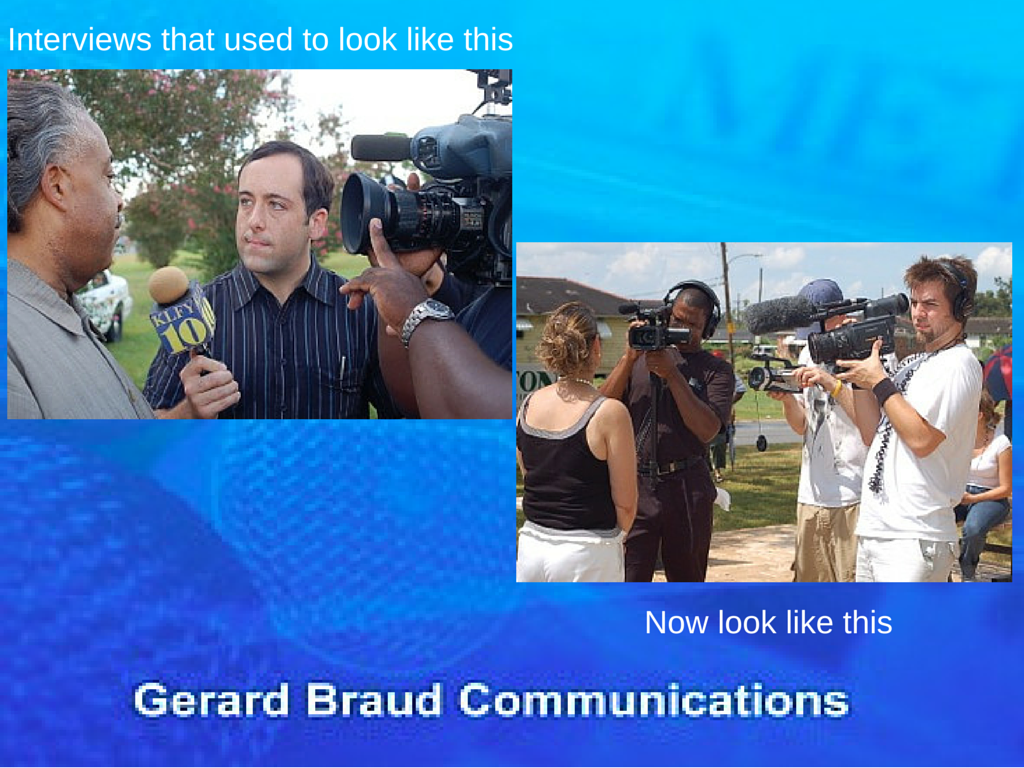
As social media and smart phones expand their reach, we are seeing a seismic shift that is sending tremors through the mainstream media landscape. This is creating both new challenges, as well as new opportunities for media spokespeople. Capitalizing on the opportunities requires you to adopt new approaches, learn new skills and be open to new realities.
If you are bold enough and brave enough to try something drastically new, then I’d love to meet you at the upcoming World Conference for the International Association of Business Communications in San Francisco. I’ve prepared an all-new special presentation for Monday, June 15 from 10:30 a.m. – 12:30 p.m. in the Club Room. It only seats 100 people, so make plans to get their early.
This is not a lecture or a class but a do-and-learn workshop. You should come ready to write in the first hour, as well as to discuss the challenges you and/or your spokespeople have faced in previous media training classes or in previous interviews. If there is a problem, the first hour is dedicated to solving those problems so they never happen again. In fact, I’m ready for you to contact me outlining problems you’ve faced that you’d like to solve. Send an e-mail to me at gerard@braudcommunications.com with the subject line IABC Question.
Our focus in the first hour will include:
Discovering why the media landscape is changing
Learning the 4 things you must be ready to say in every interview
Rethinking your approach to media training
In the second hour you will be up on your feet unlocking the futuristic power of your smartphone, learning how to do remote interviews. Please make sure to bring either your smartphone or your iPad.
While many spokespeople complain about how the media operate, the reality is that you can learn to be an expert every time either you or an executive within your business speaks to the media.
Social media is one of the biggest trends changing the media. Free content is competing with professional content. The reality is news stories are being told by eyewitnesses with a smartphone faster than the story can be told by the mainstream media and faster than a corporation might be willing to tell the story of their own crisis.
As social media grabs more of the media’s audience, the media are watching their profits disappear. That means there are fewer reporters and photographers employed to tell your corporate story in good times and in times of crisis.
Where problems exist in the media we hope you see opportunities.
The greatest opportunity for someone who is a professional business communicator or public relations expert is, on one hand, to improve your own interview skills, and at the same time, learn new skills for doing interviews and creating videos that are as good as or better than the ones being supplied by eyewitnesses.
If you crave a chance to walk away with new skills that you can immediately use as soon as you are back at work, I look forward to meeting you at this workshop.
https://braudcommunications.com/wp-content/uploads/2020/12/Logo-white-01-300x138.png00gbraudhttps://braudcommunications.com/wp-content/uploads/2020/12/Logo-white-01-300x138.pnggbraud2015-06-10 14:03:072021-05-20 01:47:23Social Media Collides With Mainstream Media: The Changing Landscape of Media Interviews in Good Times & Bad