Crisis communication resources to help you protect your revenue, reputation, and brand.
Effective crisis communications when “it” hits the fan.

Our blog is filled with deep resources to help with your crisis communication needs. Whether you are writing a crisis communication plan, seeking the best media training tips, or digging for case studies on crisis situations, you’ll find it here. Our goal is to give you all of the public relations resources you need to protect your revenue, reputation, and brand.
For those of you who love DIY and taking on a challenge, we’ve worked really hard to give you a good road map to follow. However, sometimes the fastest option is to bring in a pro. If that’s the case, we’re fully vaccinated and we’re ready to meet your needs, anywhere and anytime.
If you need help with your crisis communications plan, we’re ready to help.
When you need media training for your spokespeople, give us a call.
Anytime your organization needs a great keynote for your conference, we’d value the opportunity to serve you.
We invite you to:
By Gerard Braud
A bad media interview caused by insufficient media training is creating a crisis communication problem on social media. Experts will weigh in on this, but I don’t think any one expert has the answer as to the best way to handle this.
 I really want to know what you think.
The founder of Lululemon has posted a video to the company Facebook apologizing for comments he made in an interview on Bloomberg Television. Read the full details on my blog from last week.
As I write this, nearly 500 people have clicked “Like” on this particular Facebook post while more than 700 comments are posted. The vast majority of these comments are negative.
I have several crisis communication questions for you:
1) Do you think the founder, Chip Wilson, has made the situation better or worse by attempting to apologize on Facebook for comments he made on television?
2) Do you think the situation is getting better or worse on the Facebook brand page as the company’s public relations and social media teams try to engage in a conversation with those who post comments?
Without providing an answer to those questions, here is something to consider — Each time the public relations and social media team replies to a comment on the Facebook post, it moves the discussion higher in the news feed of the page followers, increasing the odds that someone new will jump into the conversation.
Was this a big mistake to take this discussion to Facebook?
Could this apology have found a better home in the company’s newsroom?
Was the apology itself poorly worded, leading to more negative comments?
Was the apology made only to employees and not to customers?
If the apology was to employees only, should it not have been posted where only employees would see it?
Could all of this crisis on the back end been eliminated by doing things differently on the front end?
As a father, I’ll tell you that my wife and I had a couple of basic rules when we were raising our two daughters. One rule was that you never have to fix the big things if you fix the little things. In this case, the lesson for all PR people, CEOs, and executive spokespeople, is to understand that the apology would never have been needed if the CEO had not said a foolish ad lib in the interview. The foolishness would have been eliminated if executive media training had been done prior to the original interview.
I’m amazed on a daily basis at how under valued media training is among executives and public relations teams.
In every media training class that I teach, I challenge the CEO or spokesperson with this question, “If you could attach a dollar to every word that you say, would you make money or lose money?”
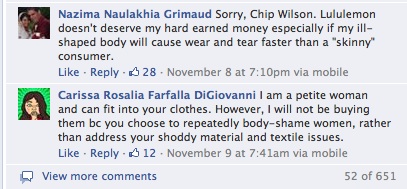 Of the more than 700 comments on the Lululemon Athletica Facebook page about this issue, many clearly say they will no longer buy the company’s product. Need I say more to prove my point? I think not.
In every crisis you should consider my “Crisis Rule of Thirds,” which states that one-third of the people love your company/brand, one-third will hate your company/brand, and the third in the middle will swing like a pendulum, based on what is popular at the moment.
In a social media crisis, in a world that is already filled with negative comments, I think many companies will lose the battle, lose the war, lose customers, and lose money.
Consider this: Delete the video, delete the Facebook post, and stop talking about it.
What do you think?
 By Gerard Braud
Experts in crisis communication know social media in corporate communications is highly likely to lead to a crisis. I would say more brands are likely to be harmed than helped by a social media brand page.
Home Depot leaders acted swiftly to fire an outside agency and an employee who posted a picture on Twitter that depicted two black drummers and a third drummer with a monkey mask, with the tweet, “Which drummer is not like the others?”
Good job Home Depot for acting swiftly. Good job Home Depot for terminating the agency and personnel who clearly don’t understand the need to think before Tweeting.
Immediately there were cries of racism. The drummers were beating on Home Depot plastic buckets and sitting in front of a promotional banner for Home Depot’s sponsorship of College Game Day.
To their credit, Home Depot used the same offending brand Twitter page to post an apology that said, “We have zero tolerance for anything so stupid and offensive. Deeply sorry. We terminated agency and individual who posted it.”
 I love that in a world where lawyers don’t let public relations employees say “sorry,” that Home Depot uses the word “sorry.” I love that they use the word “stupid.” The tweet apology is well written and conveys the anger the company feels toward the offending agency and employee.
 Home Depot uses a Facebook and YouTube brand page, but nothing is posted there relating to the Tweet. The Home Depot home page and Media Center also have no news releases or apologies.
From a crisis communication perspective, in this case I think I agree with the Home Depot public relations and crisis communication strategy to confine the crisis to only the offending branch of social media and not bring it over to Facebook or YouTube. However, now that the story is making headlines in newspapers and morning television, I think an apology in the corporate Media Center newsroom on their primary website would be in order. In fact, I would have put up a news release apology in the corporate site newsroom within minutes of issuing the apology tweet. By the way, in the crisis communication plan system that I suggest you have, such an apology would be pre-written and pre-approved on a clear sunny day… written months ago and waiting in the addendum of your crisis communication plan.
 In a crisis, it is important to tell the story from your perspective and to own the search engine optimization (SEO) for your brand and your story. Posting in your corporate newsroom helps with this. Failure to do so sends anyone searching for information to other pontifications, reports and blogs… like this one.
What should you do in your brand?
1) Review your social media policy and make it tough. The social media policies that we write at Braud Communications on behalf of our clients are brutally tough.
2) Terminate those who post recklessly.
 3) Pre-determine whether a social media crisis requires response on all social media channels or only the offending channel.
4) Pre-determine if your home page newsroom will be used for an apology. I think it should be used.
5) Consider establishing a rule that two to three internal eyes need to review every social media post before anyone hits send. Make sure those 2 to 3 people represent the cultural and age diversity of your audience. In the case of Home Depot, it was clear that the age or cultural background of the person who posted this tweet was such that it likely never crossed their mind that this tweet might be considered racist.
As crisis communication case studies go, I’ll say Home Depot is handling this one well.
By Gerard Braud

Watch the full interview
Media training, media trainers and the executives and spokespeople who go through media training need to understand the importance of practicing before every media interview.
Chip Wilson, Lululemon Founder is being criticized today for comments about how Lululemon pants only fit some women and the ongoing crisis or controversy over allegations that Lululemon pants are “see through.”
Media training requires the spokesperson, executive or CEO to recognize that every word you say can have a positive or negative impact on your corporate sales and revenue. Sales, revenue and the words you say are part of the reputation package you develop over time. As a spokesperson, you either enhance or degrade your reputation and revenues during a media interview.
Media training and the expert who serves as the media trainer, requires us to recognize that while the spokesperson, executive or CEO is invited into a media interview for one topic, other topics may be brought up. This is especially true if the interview is within a reasonable time period of a recent crisis or controversy. This is true for Lululemon and founder Chip Wilson.
Wilson is making headlines because of an interview he did on the Street Smart program on Bloomberg TV with anchor Trish Regan. Wilson appeared on Bloomberg with wife Shannon, who was being interviewed about Whil, a 60 second meditation she was promoting.
Instead of Whil and meditation being the headline in news reports today, the trending headline is “If your thighs rub together, Lululemon’s pants may not be for you.”
Regan asked Chip Wilson, “What’s going on with the pants?”
Wilson replies, “I think everything’s blown up. There is no doubt about it we made a mistake. The thing is we’re a technology company, and when you push technology, something is going to happen every now and then.”
He goes on in his confession to say, “There are a thousand things that could go wrong on a technical fabric and when three of those things go wrong at the same time something is going to happen and it is almost impossible to build a quality control case for each one of those combinations.”
Regan responds, “It’s tough and it continues to be a problem, because now there are complaints of pilling in the fabric.”
Wilson responds with an attempt at an analogy by saying, “There has always been pilling. The thing is that women will wear seatbelts that don’t work, or they will wear a purse that doesn’t work, or quite frankly some women’s bodies just actually don’t work for it.”
“They don’t work for the pants?” Regan asks.
Wilson replies, “They don’t work for some women’s bodies.”
“So it’s more likely they will be more see through on some women’s bodies than others?” Regan follows.
“No, I don’t think that way, because even our small size would fit a woman who is an extra large,” says Wilson. “It’s really about the rubbing through the thighs and how much pressure is there over a period of time and how much they use it…”
Regan injects, “Not every woman can wear Lululemon yoga pants…”
“No, I think they can. It’s just how you use it,” Wilson concludes.
Media training before the interview should have prepared Chip Wilson for a better answer. Media training in the midst of the initial controversy over the alleged “see through” yoga pants should have established a dialogue of carefully parsed, verbatim sentences. With training, Chip Wilson would have been able to say these sentences in an instant if I were to wake him from a dead sleep.
If Gerard Braud, a media trainer from New Orleans, were brought in to provide expert council and media training advice to help the 10th-richest man in Canada and his Vancouver based company, this is how he would have been taught to handle this exchange.
Regan’s initial question was open ended and neither positive nor negative. She asked, “What’s going on with the pants?”
Chip Wilson, like many CEOs, because there is a negative in his mind, focuses on the negative issue, rather than focusing on the positive solution. Remember, Regan implied no negative. Chip Wilson voluntarily went negative.
(By the way Chip Wilson, many CEOs learn this the hard way. My wealthiest CEO client is worth $2.4 Billion and knows that spending a few dollars on media training and a few minutes on practice protects his company, his brand, and his wealth. My number is 985-624-9976. Call me and I’ll let you talk with him directly as one CEO to another.)
If I were in a private executive media training with Chip Wilson, he would be coached to respond with honest truth about the Lululemon yoga pants and not the negative truth about the Lululemon yoga pants. His answer would be, “The popularity of our yoga pants continues to grow. It is humbling to see that we were able to follow our passion and create a form of sports apparel that continues to grow in popularity with men and women.”
 Since Regan appears to be fit, I might even instruct Wilson to ask the Bloomberg news anchor, “Trish, do you have a regular exercise routine and are you a Lululemon customer?” This is also something Wilson could have learned prior to the interview. If Wilson had employed this technique of asking Regan a question, chances are the discussion would have turned to Regan and her exercise routine.
There is a chance the interview would have never gone negative. If Regan followed up by saying, “A while back you had issues with women complaining that the pants were see through. Have you fixed that problem?”
Wilson could have replied, “Yes, as we investigated we found that many of these issues were caused by customers loving their pants so much they wore them often and in some cases they sat on rough surfaces, such as concrete. So, while we love the fact that customers want to wear our product a lot, like any fabric… including your favorite pair of jeans… get thinner and you need to buy a new pair.”
There is a good chance the negative tone of the interview would have ended there.
Additionally, in a politically correct, hyper-sensitive world, a CEO, a spokesperson or executive cannot say anything that could be implied as criticism of a woman’s body and shape. Regan baits Wilson with her question, “So it’s more likely they will be more see through on some women’s bodies than others?” This follow up question might never have been voiced if Wilson had used my positive, pre-planned and practiced answer, rather than his bad ad-lib.
Wilson steps in a big pile of “do-do” when he says, “It’s really about the rubbing through the thighs, how much pressure is there over a period of time and how much they use it.”
What my experience as a media trainer also picks up on here is that Wilson is likely an analytical person. Many CEOs are analytical, which causes them to answer with technical facts and confessions, in an effort to be honest. Often a stronger form of honesty can be found in a less technical and more positive answer.
Surely, the entire Lululemon public relations team gave out a loud cry when Wilson mentioned thighs? Or did they? I don’t know.
I do know that I have watched many PR teams simply tell a rich CEO what a great job they did in an interview, rather than providing honest feed back and more media training before then next interview. If you are in public relations, it is your job to provide executive council to the CEO and not be a wimp who is afraid to speak.
(For all of you who have asked, “How do I get a seat at the table?”, the answer is to have the nerve and professionalism to speak up rather than being fearful that you will lose your job.)

Read the article
In the spirit of avoiding negatives, Wilson never needed to use words such as, “There are a thousand things that could go wrong on a technical fabric and when three of those things go wrong at the same time something is going to happen and it is almost impossible to build a quality control case for each one of those combinations.” This, once again, indicates an analytical engineering type mind is answering the question.
Finally, the analogy used by Wilson about seat belts not fitting and purses not being right represents what happens when a media spokesperson does not develop and practice their analogies during their media training class.
The bottom line: Headlines on the internet and headlines in the media focus on words such as, “Chip Wilson, Lululemon Founder: ‘Some Women’s Bodies’ Not Right For Our Pants.”
This didn’t need to be the headline. The CEO is at fault. All CEOs need to recognize the importance of media training and public relations teams must not gloss over media training prior to every interview.
A shooting at the LAX Airport has the media scrambling to tell the story. The media are speculating with little or no official information. More than 90 minutes into the event I’ve not seen a spokesperson on CNN from the LAPD or from the LAX Airport.
From a crisis communication standpoint in the world of public relations, media relations and crisis communications we are watching bad PR unfold in real time. I encourage you to follow along with me.
Monitor CNN, LAX Facebook, LAX Twitter, the official LAX website, the LAPD website and the TSA website. As I monitor this story, a joint news conference has just started two hours and thirty minutes into this crisis. In 2013, that is too long of a time.
Watch my quick video and image that if you were a PR person in a crisis, you could shoot a post a short video with a first critical statement added as you will see at the end of this video.

The LAX Twitter page is the only source of official information.


The LAX Facebook page has a pumpkin from Halloween yesterday.


In a crisis, every organization must have a well written crisis communication plan that would sort out all of this on a clear sunny day so that communications can happen in one hour or less of the onset of a crisis. This is Public Relations failure in action.
Here it is in the nation’s second largest media market and the media are left to speculate and do phone calls with eyewitnesses.
Likely, right now, in a room somewhere, executives are managing the crisis and are too busy to approve a news release. The PR team is likely working from scratch to get the news release written and executives are trying to rewrite it. Meanwhile, a pre-written news release for this event should have been written years ago and put in a pre-written news release file.
Somedays I wonder when the PR profession will “get it.” This is one more example that they don’t.

Click image to watch video
Is Facebook your friend or foe in a crisis? The frightening truth is it really depends on a lot of factors.
(Don’t be afraid to look at Facebook in an all new light when you join us for this special Halloween webinar.)
Let us start with a discussion about your brand page. Do you have one? There are three schools of thought when it comes organizational brand pages.
First, many organizations don’t have one because the leaders within the organization are afraid too many people will say nasty things on the page. Secondly, some organizations have brand pages set up by excitable communicators or marketers who think Facebook is the best invention since sliced bread (or pumpkin pie). The reality is your organization may not be the kind of place the average person wants to “Like” and read about in their Facebook newsfeed. I personally have no desire to follow my bank, hospital or electric company. Thirdly, there are organizations — especially in the realm of fun consumer brands — that people “Like” to have in their newsfeed and love to engage with.
Regardless of which of the three categories applies to you, when a crisis happens, Facebook sometimes becomes one of your best communications outlet for getting actionable information to key audiences. But here is the scary part — It can also be a place where the world gangs up on you because of how you are communicating during the crisis.
Let us look at three types of crises and how they played out on Facebook, and what you should do to be prepared in a similar situation.
The most frightening thing I’ve observed this year was the use of Facebook by individuals who quickly set up a Facebook page and publish more information about your crisis than your organization is publishing on all of your communications channels.
 On the morning of June 13, 2013 there was a tragic explosion and fire at the Williams Olefins Chemical plant in Geismar, LA, about 50 miles from my home, which killed 2 workers and injured 114 more. Before the company had a single news release issued, or before they provided any images or videos posted to the web, either community members or employees published a Facebook page with more details than the company ever gave.
 The owner of this “Fan” page has not responded to my requests for an interview. A friend who works for Williams had told me long ago that the company does not allow the communications department to use any of the advanced crisis communications procedures that I recommend. Instead, their corporate bosses subscribe to FEMA’s National Incident Management System (NIMS) which relegates the task of communicating details about the crisis to the Louisiana State Police.
I personally hate NIMS. A state trooper can only communicate response details. The trooper isn’t able to communicate empathy to the community, nor is there anything about NIMS that meets the needs of employees who know people who have been personally affected. Furthermore, NIMS provides no social media presence.
For the record, my crisis communications plans dictate that the company in crisis must communicate with the outside world within one hour or less of the onset of the crisis. My priorities in such an event would be as follows:
1) Use a modified, pre-written news release template from my crisis communications plan, as my script for a live news conference with all media who have gathered at the scene of the explosion.
2) Post the identical pre-written news release to the corporate website.
3) Send an e-mail to all employees, media and stakeholders, with the identical information in text and with a link to the company website.
4) Create a short YouTube video with the identical information.
5) Post a link on Facebook with a link to the website and the video.
6) Post a link to Twitter with a link to the website and the video.
7) Add photos and videos to the corporate website and to Facebook as the event continues to unfold.
Throughout your crisis, your official website is the most secure location for official information. Social media can be used, but must be monitored and facilitated to handle comments. Using social media requires you to have ample staff.
In this case study of the Williams Company, eye witnesses did a better job of providing information than the company and the state police.
Don’t let a similar situation be your demise.
Next, consider scary weather and Facebook. In many weather events, the electricity goes out and people are displaced from their homes. When the lights are on and people are at home, they tend to migrate to Google on their computer for information about a crisis. But when the lights are out and people may not be home, they generally turn to their mobile phone and Facebook becomes a big player.
Likewise, if you are trying to function in an official capacity without electricity and you have difficulty accessing your corporate website, Facebook becomes a great communications option for you, because you can access and update it via your smart phone.
Weather events also become a time when a brand page is really needed and all the more reason to set one up on a clear sunny day, even though you might not usually attract many “Likes” during normal times. Trust me, your “Likes” will go up exponentially during the crisis.
This year we’ve had serious forest fires, floods, deadly tornadoes and pre-season snow storms. In every case, organizations have seen their Facebook followers spike. A quick way to see proof is to visit a Facebook page of an electric company in a region affected by a natural disaster. On the “about” link you can access the analytics that allow you to view the spike in “Likes” during the crisis.
Furthermore, in a weather event, your organization may be a small part of a big story, fighting with bigger players for media attention. Facebook circumvents the media and allows you to take details straight to your primary audience.
Finally, consider that some scary events can quickly turn your Facebook page into a bitching page, especially if the synical audience on social media thinks some aspect of your crisis has been handled poorly. A good example is a shooting at Middle Tennessee State University on February 14, 2011.
 When a gunman was reported, the University used their text message system to alert students of the potential danger. But prior to the crisis, the University apparently did not do a good enough job of managing the expectations of the student body to make them aware that mass texting systems often take 20 – 30 minutes before everyone gets their alert message. This is the kind of thing that must be managed on a clear sunny day with proper information and a test text, rather than creating a crisis within a crisis on the day of your crisis.
During the Middle Tennessee crisis, the University’s Facebook page lit up, with more comments about slow text alerts than there were comments about the event.
So upon further consideration, is Facebook your friend or foe in a crisis?
There are some scary things happening on Facebook during crises and you can’t afford to get tricked by them. Take steps today to be prepared.
Learn more by signing up today for this special Halloween Webinar.
By Gerard Braud
 While working with crisis communications clients, I provide a “first critical statement” template. This template is intended to be read to the media, emailed to employees, and posted to the web in the first hour of a crisis when little is known about the emerging crisis. Some companies that operate facilities that have no spokespeople on site, but that have a security guard at the front gate. I’ve suggested that the template is simple enough that a security guard could go through low-level media training and be taught to deliver the message if media showed up at the front gate.
Amazingly and predictably, executives, in a semi-confidential and ultra condescending way, will say, “Have you met those people? They can’t be trusted with that!”
My response is, “Well, you gave ’em a gun.”
While some security companies employ highly trained security professionals, others employ people with skills equal to a day laborer. Some are taught to simply check badges and passes at a guard gate. Many have little education, poor verbal skills, and they come to work with a power attitude they developed when a badge was bestowed upon them.
Regardless of their skill level, three things are true:
1) If a crisis happens, chances are they will encounter the media and may be the first person the media approaches with cameras and questions.
2) If there is a chance for a real life media encounter, then they need to be an active part of your crisis communications drill.
3) They can be media trained to deliver the first critical statement. I’ve done it successfully many times.
As you plan your crisis communications drill scenario, let your mock media team know that testing the security team is an important part of the drill. Your mock media team should be reasonably assertive without being aggressive with the security personnel.
 The goal is to record on video tape what the guards do and say. Guards generally all do the same thing. Some instinctively say, “No comment.” Others verbally and forcefully tell the mock media that they cannot be on the site or that they will be arrested, even when the mock media are standing safely and legally on the public right of way. Many security guards feel a need to put their hands on the camera lens to block the view of the camera. Some try to physically push and escort mock reporters away.
It is somewhat comical from my standpoint because they do all the things they’ve ever seen other guards do in any bad television situation.
Security guards often are the proverbial worst first impression. What they say can and will be used against them in the court of public opinion.
Such behavior sends a message to the public that the company has done something wrong and that they have something to hide.
Remember, if a drill is your opportunity to mess up in private, so behaviors can be addressed and corrected, challenging the security team in your drill is important.
Furthermore, a low-level media training class needs to be created to teach these guards how they appear to the public when they act inappropriately with the media. They must be taught to politely instruct the media where to park. Next guards must be taught how to ask the media for credentials and a business card so the appropriate media contact in the company can be called. The guards also need to be taught a verbal script. This may be, “How can I help you?” “If you’ll provide me with your media credentials and a business card I’ll be glad to call someone who can speak with you.”
 When the guards are asked casual questions by either real or mock reporters, they need to respond, “My responsibilities are confined to maintaining security at this entrance, but I’m sure someone from the company will be able to answer all of your questions shortly, so if you will, please bare with me while I tend to may assigned duties, you should be hearing from someone soon.”
It wouldn’t hurt to have a printed statement at the entrance for the guard to hand out.
You only get one chance to make a good first impression. Make sure your security guards make a good first impression and that they are included in every crisis communications drill.