Crisis communication resources to help you protect your revenue, reputation, and brand.
Effective crisis communications when “it” hits the fan.

Our blog is filled with deep resources to help with your crisis communication needs. Whether you are writing a crisis communication plan, seeking the best media training tips, or digging for case studies on crisis situations, you’ll find it here. Our goal is to give you all of the public relations resources you need to protect your revenue, reputation, and brand.
For those of you who love DIY and taking on a challenge, we’ve worked really hard to give you a good road map to follow. However, sometimes the fastest option is to bring in a pro. If that’s the case, we’re fully vaccinated and we’re ready to meet your needs, anywhere and anytime.
If you need help with your crisis communications plan, we’re ready to help.
When you need media training for your spokespeople, give us a call.
Anytime your organization needs a great keynote for your conference, we’d value the opportunity to serve you.
We invite you to:
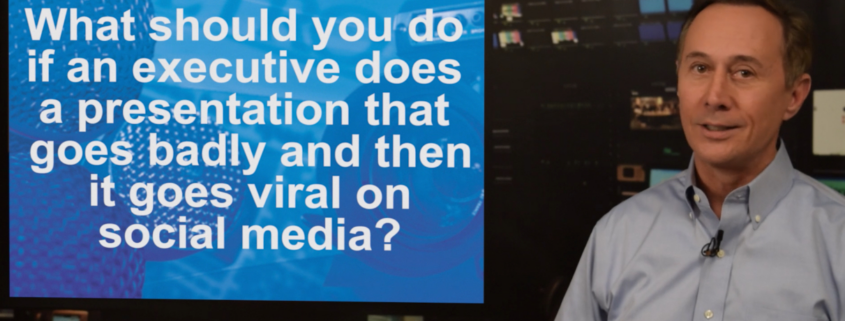
Crisis communications expert Gerard Braud polled social media earlier this week to ask, “What should you do if an executive does a presentation that goes badly and goes viral on social media?” The experts have weighed in on social media and their opinions are shared in this video.
We now want you to learn from their tips, but also keep the conversation going. Do you agree with their comments? What would you add to the discussion? From a PR standpoint, what would you do to protect the brand, reputation, and revenue of your company and of your executive? How do you deal with the rapid pace and reach of social media as a means of communication and representation of your senior-level executives?
We would love to hear your thoughts this week. Comment here and on our social media pages to join the discussion. Your answers may be featured in our follow-up video!
This question is one of a series of debates in the media relations, crisis communications, public relations, and social media industries where you and your colleagues can share observations with each other. Yes, YOU are invited to share your bite size bits of best practices. Here is how:
Step 1: Subscribe to The BraudCast on YouTube
Step 2: You will see a short video that poses a new question every Monday. You then post your best practices and observations on The BraudCast YouTube channel.
Step 3: Once your opinion is shared, you can follow the discussion online so you can compare your best practices to those of your professional colleagues.
Step 4: Watch the follow-up Friday Video where you will see a short YouTube video outlining some of the most interesting observations. Yes…your comments may actually show up on our BraudCast video, bringing you world-wide fame, fortune, a big raise, glory, street parades, and more.
Thanks in advance for sharing your knowledge. Please take 2 seconds now to subscribe to The BraudCast.
This week, crisis communication expert Gerard Braud polls social media to ask, “What should you do if an executive does a presentation that goes badly and goes viral on social media?” We want to hear your expert tips this week!
In today’s world of social media, everything and anything can become public in an instant. Whether it’s a CEO getting angry, a Domino’s worker being less than sanitary at work, or a disgruntled customer talking about their experience with customer service, social media becomes a platform for these videos to air publicly. From a PR standpoint, what would you do to protect the brand, reputation, and revenue of your company and of your executive?
We would love to hear your thoughts this week. Comment here and on our social media pages to join the discussion. Your answers may be featured in our follow-up video!
This question is one of a series of debates in the media relations, crisis communications, public relations, and social media industries where you and your colleagues can share observations with each other. Yes, YOU are invited to share your bite size bits of best practices. Here is how:
Step 1: Subscribe to The BraudCast on YouTube
Step 2: You will see a short video that poses a new question every Monday. You then post your best practices and observations on The BraudCast YouTube channel.
Step 3: Once your opinion is shared, you can follow the discussion online so you can compare your best practices to those of your professional colleagues.
Step 4: Watch the follow-up Friday Video where you will see a short YouTube video outlining some of the most interesting observations. Yes…your comments may actually show up on our BraudCast video, bringing you world-wide fame, fortune, a big raise, glory, street parades, and more.
Thanks in advance for sharing your knowledge. Please take 2 seconds now to subscribe to The BraudCast.

Earlier this week, crisis communications expert Gerard Braud polled social media to ask, “Should you write a letter to the editor for a bad story, or let it die?” Public relations experts, corporate communicators, and media relations experts have weighed in and shared their comments. You can watch this week’s video to hear their thoughts, as well as comment with your own opinions and experiences.
Should you only write to the editor if the story is inaccurate? Or should you write to the editor if the story reflects poorly on you or your organization? What if the story about you is true? These are all things to consider for this week’s discussion question.
We would love to hear your thoughts this week. Comment here and on our social media pages to join the discussion. Your answers may be featured in our follow-up video!
This question is one of a series of debates in the media relations, crisis communications, public relations, and social media industries where you and your colleagues can share observations with each other. Yes, YOU are invited to share your bite size bits of best practices. Here is how:
Step 1: Subscribe to The BraudCast on YouTube
Step 2: You will see a short video that poses a new question every Monday. You then post your best practices and observations on The BraudCast YouTube channel.
3: Once your opinion is shared, you can follow the discussion online so you can compare your best practices to those of your professional colleagues.
Step 4: Watch the Follow up Friday Video where you will see a short YouTube video outlining some of the most interesting observations. Yes…your comments may actually show up on our BraudCast video, bringing you world-wide fame, fortune, a big raise, glory, street parades, and more.
Thanks in advance for sharing your knowledge. Please take 2 seconds now to subscribe to The BraudCast.
This week, crisis communication expert Gerard Braud polls social media to ask, “Should you write a letter to the editor for a bad story, or let it die?” He is awaiting tips from social media’s best public relations experts and corporate communicators. When a journalist misquotes you or says something negative about you or your organization, do you approach the editor or the journalist? Do you run the risk of an even worse story coming out about you? Do you run the risk of ruining your relationship with the media? If you were to go about writing a letter to the editor for a bad story, how would you do it?
These are all things to consider for this week’s discussion question.
We would love to hear your thoughts this week. Comment here and on our social media pages to join the discussion. Your answers may be featured in our follow-up video!
This question is one of a series of debates in the media relations, crisis communications, public relations, and social media industries where you and your colleagues can share observations with each other. Yes, YOU are invited to share your bite size bits of best practices. Here is how:
Step 1: Subscribe to The BraudCast on YouTube
Step 2: You will see a short video that poses a new question every Monday. You then post your best practices and observations on The BraudCast YouTube channel.
3: Once your opinion is shared, you can follow the discussion online so you can compare your best practices to those of your professional colleagues.
Step 4: Watch the Follow up Friday Video where you will see a short YouTube video outlining some of the most interesting observations. Yes…your comments may actually show up on our BraudCast video, bringing you world-wide fame, fortune, a big raise, glory, street parades, and more.
Thanks in advance for sharing your knowledge. Please take 2 seconds now to subscribe to The BraudCast.

Earlier this week, crisis communications expert Gerard Braud asked media and PR experts the discussion question: “Should men wear makeup in a media interview?” Today he is sharing their tips from social media.
Opinions ranged from the “absolutely, always,” spectrum to “they don’t have to.” What would you add to the answers that were shared this week? If you did want your CEO to wear makeup in a media interview, how would you persuade them to do so? Please join in and add to the discussion. Comment here and on our social media pages to join us.
This question is one of a series of debates in the media relations, crisis communications, public relations, and social media industries where you and your colleagues can share observations with each other. Yes, YOU are invited to share your bite size bits of best practices. Here is how:
Step 1: Subscribe to The BraudCast on YouTube
Step 2: You will see a short video that poses a new question every Monday. You then post your best practices and observations on The BraudCast YouTube channel.
3: Once your opinion is shared, you can follow the discussion online so you can compare your best practices to those of your professional colleagues.
Step 4: Watch the Follow up Friday Video where you will see a short YouTube video outlining some of the most interesting observations. Yes…your comments may actually show up on our BraudCast video, bringing you world-wide fame, fortune, a big raise, glory, street parades, and more.
Thanks in advance for sharing your knowledge. Please take 2 seconds now to subscribe to The BraudCast.
In this video, crisis communications expert Gerard Braud asks media relations, public relations, and corporate communications professionals, “Should men wear makeup in a media interview?”
We can all remember a time when a certain President was looking extra tired or ill on camera. It’s also clear when a CEO doing a media interview has way too much oily shine on their face. But, have you ever spotted a male on camera that had too much makeup on? How do you ensure it’s done professionally and effectively? If you think they should wear it, should they hire a professional makeup artist? These are all things to consider for this week’s discussion question.
We would love to hear your thoughts this week. Comment here and on our social media pages to join the discussion. Your answers may be featured in our follow-up video!
This question is one of a series of debates in the media relations, crisis communications, public relations, and social media industries where you and your colleagues can share observations with each other. Yes, YOU are invited to share your bite size bits of best practices. Here is how:
Step 1: Subscribe to The BraudCast on YouTube
Step 2: You will see a short video that poses a new question every Monday. You then post your best practices and observations on The BraudCast YouTube channel.
3: Once your opinion is shared, you can follow the discussion online so you can compare your best practices to those of your professional colleagues.
Step 4: Watch the Follow up Friday Video where you will see a short YouTube video outlining some of the most interesting observations. Yes…your comments may actually show up on our BraudCast video, bringing you world-wide fame, fortune, a big raise, glory, street parades, and more.
Thanks in advance for sharing your knowledge. Please take 2 seconds now to subscribe to The BraudCast.