7 Frightening Media Realities for Public Relations

By Gerard Braud –-

As the media changes, your media relations strategy must change with it. We covered these changes and strategies in detail at the International Association of Business Communicators (IABC) conference in San Francisco during my Monday morning workshop, #IABC15 The Changing Media Landscape.

For those of you who attended the workshop, this blog will be part of the continuing education program you were promised. For those who missed the workshop, this will help you learn what the group learned. For those of you who would like a similar workshop for your chapter or professional association, please contact me at gerard@braudcommunications.com.

Before the teach-back segment, here are links to the two additional free training modules I offered to everyone:

Resource #1: 29-Day Media Training Online Program

  • Follow this link
  • Enter coupon code BRAUD
  • Click APPLY
  • When you see this $199 program ring up as $00.00, enter your e-mail address
  • Hit submit order.

Resource #2: 23-Day Video Tutorial for Smartphone News Videos

The changes in the media landscape include:

1) Reduced staffs, i.e. fewer reporters, photographers and journalists to tell your story.
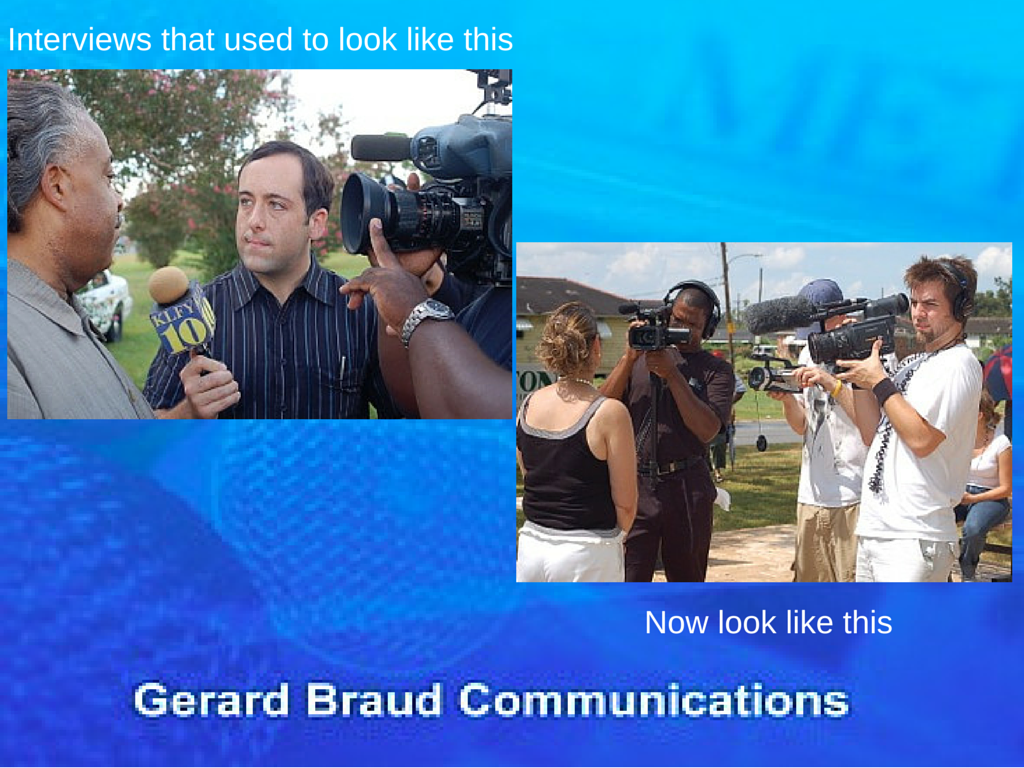
Interviews

Not too long ago a typical network news crew had five people. A typical local television or print crew had a reporter and photographer. Today, newspapers and television stations alike expect a single person to be both the reporter and photographer.


2) The “Caught on Video” craze.
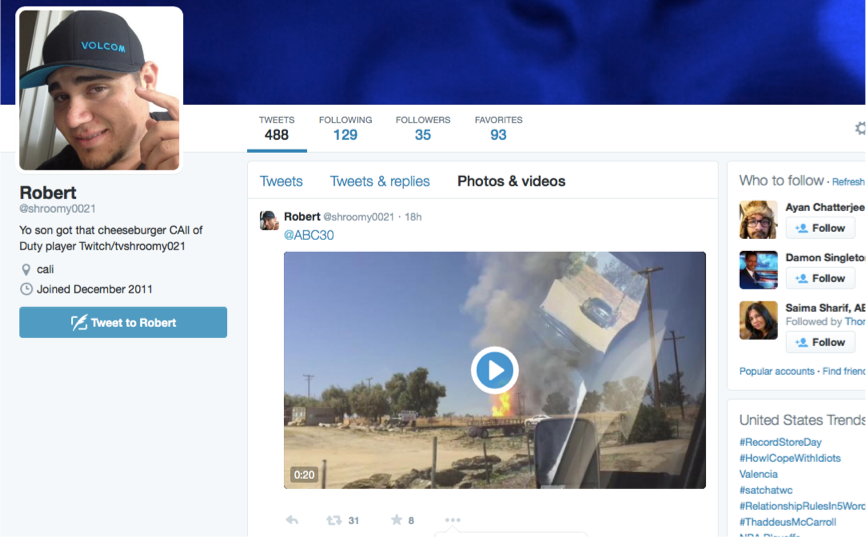
PastedGraphic-2With fewer employees to gather the news, the media depend upon videos submitted by eyewitnesses. The media save a lot of money by not having to chase the news and by letting the news come to them. However, verifying authenticity and facts is a problem. The old rule of, “consider the source,” seems to have gone out the window.

9866FC2E-26CB-4F4A-9366-0079E19FDD8E[1]

caughtonvideoStatistics provided by IQ Media show that in the past three years, there has been a monumental jump in the number of times the phrase “caught on video” is said on television broadcasts.


3) Substituting Trending for NewsPastedGraphic-3

Virtually every television news cast and every media website feature a segment about what is trending. This means that television airtime and web space are being filled with fluff provided by social media, rather than news gathered by professionals.

Statistics provided by IQ Media show that in the past three years, there has been a monumental jump in the number of times the phrase “trending” is said on television broadcasts.

trending


4) Judgment Day is Everyday

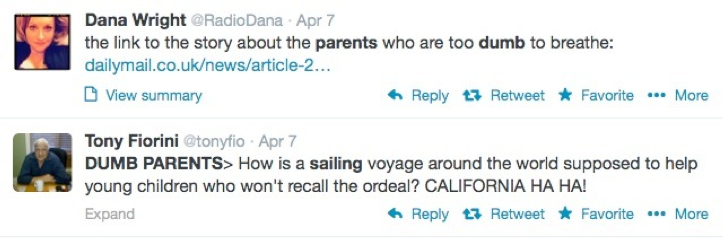
The media have also substituted real news with social media comments from people who judge other people. A perfect example is the condemnation after the U.S. Navy rescued a family from their sinking sailboat on April 6, 2014. The parents had a small child on board and social media lit up with mean comments, which made up a huge part of the news coverage.
PastedGraphic-8


5) Pretend In-Depth Coverage

CNN looked foolish with their all-in attempt to cover the Malaysia 370 plane disappearance. Non-stop coverage of a single issue means fewer employees are needed than if your network covered a variety of issues affecting the lives of viewers.


6) Fake Breaking News

Combined with the pretend in-depth coverage is fake breaking news. The television media have a need to put up a banner across the screen each time they learn one new detail, regardless of how silly it is.

PastedGraphic-4 PastedGraphic-5


Among the many crazy things that CNN called “breaking news” in the Malaysia 370 story, is first breaking the news that the final words from the crew were, “Alright, good night.” The next day it was “breaking news” that the final words were, “Good night Malaysia three seven zero.”

Really CNN? In my time as a journalist we would have called that an error and a correction.

Statistics provided by IQ Media show that in the past three years, there has been a monumental jump in the number of times the phrase “breaking news” is said on television broadcasts.

PastedGraphic-6


Solutions to Media Changes

Among the many solutions we discussed, is the need to recognize that in the future, the media will expect you to provide video from any crisis experienced by your company, as well as a narrative. They will expect you to do a selfie style video directly from the scene.

Such videos are hard to do and require training and practice. While the interactive portion of our workshop taught some of the basic skills, the online 23-part tutorial will teach you even more.

Tutorial #3: How to Plan for Your Next Hurricane on a Clear Sunny Day

Tutorial #3 CNN iReporter Evangelist Gerard Braud

Everyday in June I will be sharing tutorials for effective crisis communications during hurricane season.  The lessons apply to tornadoes, floods, blizzards, and other natural disasters. The future of crisis communications is in video, particularly CNN iReports, which allow organizations to tell the story of their crisis to their customers, audiences and key stakeholders, rather than speculating eyewitnesses. When speculating eyewitnesses videotape your crisis on their smartphones and it gets shared across local or even national media, your organizations reputation and revenue suffer.

Tutorial #2 Still image Gerard Braud

Click image to watch video

CNN iReports should be added to the crisis communicationsmedia relations and social media tool kit of every corporation, government agency, and non-profit organization in the world. Should your organization experience a significant crisis that gets significant media coverage, iReports are your direct path to adding perspective and official information about your breaking news story.

Just as most of you have established an account at FacebookYouTube and Twitter, you should have an account pre-established at www.cnn.com/ireport so it is ready to use if you need it. Unlike other social media sites, you will use this one less often.

The set up process is fast and simple. If you have created any online profile in the past you can figure it out and complete the task in 5-10 minutes.Isaac Ireport Gerard Braud

Some leaders and executives may question whether the company needs an iReport account. My philosophy is that if you experience a newsworthy crisis, you have two options.  You can either have your story told by an unofficial eyewitness on the street that has an iReport account or you can provide better video, more factual details, and dispel rumors.

Shortly after your video is filed, a team of CNN iReport producers will watch your video. if they like it, they label it as vetted by CNN. The link is then shared with producers for the various CNN news programs. If those producers like it, they may place all or part of the video on the air in their news program. If your video proves that you have great visuals, a compelling perspective and compelling information, expect to get a phone call from CNN producers, asking you to do a live report via Skype, using your computer, smart phone or tablet.

You will learn more about how to properly produce a newsworthy CNN iReport in an upcoming article. But before we go into depth on that, your assignment is to set up your official account right now.Gerard Braud Media Training and Crisis Communication with IPad IPhone

This link will take you to my tutorials on the CNN iReporter website. I hope you take the time to view, study, and share all 23 videos and articles.

This link will take you to the index for all of the articles and videos.

If you, like many others, think this information would be valuable as a workshop at a conference or corporate meeting, please call me at 985-624-9976. You can also download a PDF that outlines the program, Social Media iReports.pdf, so you can share it with your meeting planner or training manager.


Hurricane Season Crisis & Emergency Communications: Why You Should be a CNN iReporter

By Gerard Braud

Click here to watch video

Click here to watch video

The future of crisis and emergency communications in hurricanes, natural disasters and other weather related events,  is in creating CNN iReports. It is a brilliant way to add to your crisis communications and media relations strategy. This strategy is perfect for public information officers (PIOs), emergency managers, and any corporate communications experts. Best of all, what you do for your iReport can be re-purposed and posted to YouTube, shared with The Weather Channel, and in many cases, uploaded through links with your local media outlets.

I started pioneering these reports as an experiment during Tropical Storm Lee in 2011 and then took it up a notch during Hurricane Isaac in 2012. You can do what I have done, provided you are willing to train and practice before the event is upon you. Since many of you will never have the chance to attend one of the live training sessions I teach at emergency management and public relations conferences, I thought you might benefit from this online tutorial.

I’ve created 23 online videos with associated articles on how and why you should be a CNN iReporter. When your organization faces a major crisis or news event that gets significant attention from your local news media, and has the ability be get national news attention, these will be useful.

I have extensive experience as an iReporter. In 2013, CNN selected me as one of their top iReporters, out of more than 11,000 reporters, for my in-depth coverage of Hurricane Isaac near New Orleans on August 28, 2012.

Most iReports are eyewitness accounts of events. They are filed by the average person on the street who sends photos, video and narration directly to CNN, in the very same way that they can send videos to YouTube. What you will learn in these 23 lessons also applies to placing videos on YouTube, FaceBook, Twitter and your official website.

Who would you rather have posting photos, videos and narration? Should it be someone speculating about what they see? Would it be better if it came from an official source, with real knowledge of the event? Shouldn’t the media have official information from someone like you?

A CNN iReport is a direct path to one of the world’s premier news networks.

This link will take you to my tutorials on the CNN iReporter website. I hope you take the time to view, study, and share all 23 videos and articles.

This link will take you to the index for all of the articles and videos.

If you, like many others, think this information would be valuable as a workshop at a conference or corporate meeting, please call me at 985-624-9976. You can also download a PDF with a description of the program: Social Media iReports.pdf, so you can share it with your meeting planner or training manager.


6 PR Questions: Are You a Rug or a Flying Carpet?

Gerard Braud * 15By Gerard Braud

In your public relations and communications role, which are you? Are you a rug or a flying carpet?

My dream is for you to soar as a PR expert, being both a thought leader and a brilliant, innovative, practitioner of your craft. My fear is that you let the so-called leaders in your company walk all over you, dictating what you can and can’t do.

Here are 6 questions to help you determine the answer, if you don’t know it already:

#1 Do your corporate leaders comprehend the monetary benefit of what you do OR do they see you as a financial burden?

#2 Do you hear “no” so often that you are feeling defeated and underappreciated? OR do you get summoned on a regular basis to serve as strategic council?

#3 Is it hard to focus on your tasks and know what your goals are because your leaders spontaneously throw new tasks at you? OR Do your leaders give you room to develop a communications plan with strategic goals and editorial calendars?

#4 Are you in constant reactive mode to emerging issues and crisis communications? OR do your leaders encourage preparation by having a crisis communications plan tested with crisis communications drills?

#5 When it is time to do a media interview, do you hold your breath fearing what your leaders may blurt out to a reporter? OR do your leaders willingly participate in media training and actively prepare for an interview?

#6 Do your leaders lump together tasks such as marketing, graphic design, internal communications, public relations and social media? OR do they recognize that unique talents and skills are needed to properly master each task?

If you are agreeing with the negative premises above, then you are a rug. You allow your employer to walk all over you. You are in a low place. You probably hate your job. Chances are you need to hire a headhunter and find a new job.

If you are agreeing with the positive premises above, then you are a flying carpet who can soar in your career. The sky is the limit. Life is good and rewards will follow.

Life is too short to be unhappy. The decision to control your happiness should be in your hands and not the hands of someone else.

3 Key Human Resources Considerations & 5 Strategies for Employee Communications in a Crisis

Gerard Braud Crisis Plan VideoBy Gerard Braud –

You’ve heard HR leaders and executives say it many times, “Our employees are our number one asset.” If this is true, should those same employees also become your most important audience when a crisis strikes?

An increasing number of HR departments are taking the lead in crisis communications planning to make sure employee engagement is maintained in crisis communications plans.

Public relations teams traditionally wrote and executed a corporate crisis communication plan. In most plans, communications were targeted toward the media.

But the time has come for human resource professionals to forge a stronger partnership with each public relations team. Corporate crisis communications plans must ensure proper and equal communications to the media, employees and social media audiences.

Here are three considerations:

Consideration #1: Employees use social media apps on their personal smart phones. This means they can quickly disseminate facts or rumors about your company’s crisis.

Consideration #2: Haters love to spread rumors on social media, which if read by your employees, can cause employees to doubt whether the corporation is communicating the truth to them.

Consideration #3: With each minute that you fail to communicate to your employees and the outside world, your corporate reputation and revenue are being damaged.

Years ago the media were the most important audience in a crisis communications plan.  They were the pathway to get your message to the masses, including your employees. But that has changed, beginning with the advent of e-mail, the web and Intranet sites. Each created a direct pathway for effective employee communications. HR and PR were able to share the responsibility for daily employee engagement.

These same tools should be your primary crisis communications tool.

HR and PR should want employees to get their news, especially about a crisis, from the company, rather than the mainstream media or social media.

Sadly, the norm seems to be that corporate executives make the mistake of thinking that when a crisis strikes they can gather critical executives in a room and hash out a strategy and write a statement. This doesn’t work and it is a recipe for disaster. When time is of the essence there is no time for impending disagreements, personality conflicts, and fights over commas and semantics in news releases. But that is exactly what happens when executives are arrogant enough to think they can “wing it” on the day of their crisis.

It is far wiser to spend a few dollars to prepare, than to watch large sums of money disappear because of falling stock prices and dropping sales, precipitated by a void in timely communications during a crisis.

While your company likely cannot communicate at the speed of Twitter, a reasonable goal is to issue your first statement to the media, employees and other stakeholders within one hour of any crisis going public.

What should you do if you are in HR?

1) Meet with your public relations team and make sure the company has written a crisis communications plan.

2) If there is no plan, partner with PR to write a plan that provides specific steps to communicate with the media, employees and key stakeholders.

3) Ensure that your plan is built for speed, by writing a library of pre-written news releases, constructed with a fill-in-the-blank and multiple choice format, in order to speed up your communications.

4) Establish a policy that states your employees and the media will get identical information at the same time. Never give employees information that is not provided to the media. Also, never give employees any information before giving it to the media.

Posting your official statement on your corporate website lets you provide links by e-mail to all employees and media with the click of a button. The same link can be posted to social media.

5) To perform flawlessly during your crisis you must practice when there is no crisis. Test your crisis communications plan at least once a year with a crisis communications drill.

Surprisingly, many companies do not see a need for a crisis communications plan until it is too late. Of the companies wise enough to have plans, many have failed to update their plans to emphasize the speed, urgency, and importance of communicating with employees.

If your employees are your greatest priority, you should provide them timely and honest information when a crisis strikes.


Media Interview Mistakes of Jeb Bush: The Sequel

jebbushrenoBy Gerard Braud

In yesterday’s blog we talked about the impact a bad media interview can have on a spokesperson, whether it is a candidate running for office or a corporate executive. In the article, we examined presidential candidate Jeb Bush and his interview with Fox News.

One additional aspect of a bad interview is our lesson today, as it plays out in the current news cycle. University of Nevada student Ivy Ziedrich challenged Jeb Bush in Reno, asserting that his brother George Bush’s decision to invade Iraq has given birth to ISIS.

What we see in this example is that a bad answer that makes headlines one day extends into more news cycles the next day. Rather than being able to focus on current issues and moving the conversation forward, Bush has to repeatedly focus on his past statement. This is a problem that many political candidates fall into. Bush is not the first and he will not be the last.

When your goal is to drive forward as a CEO, an executive, or a businessman or woman, it is difficult to see the road ahead when you have to deal with what is in your rear view mirror. Don’t let one misplaced statement harm your reputation or revenue.

5 Crisis Communications Lessons from Dr. Oz

droz 2By Gerard Braud

Dr. Mehmet Oz is in crisis communications mode. He has been making headlines in the media as medical colleagues criticize him for advice he gives and things he says on his syndicated television program.

His hometown newspaper, the New Jersey Register, asked for my opinion on how Oz has begun to attack his critics. You can read the full article here:

When a crisis comes, you can communicate or remain silent. My advice is that if the crisis is the result of criticism and you feel the criticism is unfair, then defending yourself by attacking your critics is a strong tactic. Oz has been on the attack against his critics, sighting that they have ulterior motives.

booklesson gerard braud

If the media tell the story of your critics, you must reach out to the media to tell your story. Too many executives caught up in a crisis or controversy in the media, believe in the flawed old adage that, “You should never get in a fight with someone who buys ink by the barrel.” (I address this in Lesson 7 of my book Don’t Talk to the Media Until…).

Here are 5 ways to address critics:

1) Call a news conference and point out the flaws in their statements.

2) Write letters to the editor to all publications that publish erroneous criticism from your opponents. Keep the letter to about 150 – 200 words.

3) Post a longer version of your letter to your own website.

4) Think carefully before taking your fight to social media. The haters can get ugly fast and make the problem worse.

5) Never underestimate the power of taking out ads in major publications so you can print your full letter.

Don’t let a critic hurt your brand, your reputation or your revenue.

The Crisis Management Wake-up Call for Communities, Government, Law Enforcement and Business

baltimore policeBy Gerard Braud

Generally we talk about crisis communications. But sometimes, we need to talk about crisis management. If we manage a crisis to keep it from happening, then we don’t need to communicate about it. Often, crisis management can begin by looking at case studies.

The crisis in Ferguson, Missouri should have been a wake-up call that should have prevented the Baltimore riots from happening. The Baltimore crisis should be the wake-up call that prevents the next community crisis from happening. These are only two community crises that should warn us all that more will follow, if crisis management action isn’t taken.

Most amazing to me is how frequently police officers are caught on video these days doing something wrong. A law enforcement agency can have 1,000 perfect officers, but they only need one rogue police officer to bring an entire department and community to its knees. The number of unjustified shootings and arrests being captured on video is astounding. Each becomes a high profile example of a growing problem, regardless of all of the many justified arrests made by officers.

The margin for error is small. Wake up. Video cameras are everywhere. This is not a suggestion that officers need to learn how to avoid being recorded and caught. This is a suggestion that crisis management in communities must begin with self correction of bad behavior. Good cops need to weed out the bad cops. Police departments need to establish new integrity standards to weed out the bad officers before their behavior paralyzes another department and community.

Likewise, elected officials and police chiefs in every community need to enact crisis management techniques designed to aggressively weed out the rogue individuals who wear a badge. The high cost of human life and community destruction demand it.

As part of a crisis management strategy, elected officials need to start managing the crisis of poverty, under-performing schools, unemployment, and other community problems. No small task, but again, the high cost of human life and community destruction demand it. Aggressive policing in a high crime area doesn’t correct the problem, it only treats the symptom.

Preventing a crisis is economically more affective that dealing with the crisis and the aftermath.

Those of you in business, likewise, need to exercise your own crisis management by meeting with elected officials and law enforcement to hold their feet to the fire to make sure they are taking action. Their failings hurt you financially.

Businesses and business groups can also take direct action in communities to improve the quality of life, without waiting for government to lift the heavy load alone. Business groups can circumvent government to establish community centers, youth mentorship programs, and job training programs.

As we’ve seen in Baltimore, Ferguson and other communities, businesses are incapacitated and often destroyed when the crisis gets out of hand. Business pays a heavy price.

As it stands now, Ferguson and Baltimore have ignited the fires of frustration. Each serves as a model for the next community to follow. Now that the die is cast, you can expect each sequential crisis to be bigger than those before it.

The task of proactively changing a community is difficult. Failure to tackle the difficult task is costly.

What will you do?

When “It” Hits the Fan – Hurricane Season Readiness & Effective Communications

hurricane seasonBy Gerard Braud

Forecasters are watching for what might be the development of the first hurricane of 2015.  This happens just as the Louisiana Emergency Preparedness Association (LEPA) meets in Lake Charles, Louisiana, in advance of the official hurricane season.

I’m delivering the opening keynote presentation to LEPA emergency managers this morning as we look at how effective communications is changing. Emergency managers are being called upon to not only use all of their traditional crisis communications methods, but how to also incorporate social media and mobile technology.

Whether you are part of this group or not, you can take advantage of the lessons being shared using the resources below.

I’ve prepared two handouts for the group, which can be downloaded here:

Weathering the Storm

Leadership When “It” Hits the Fan

If you’d like to perfect your skills for creating effective videos to communicate with your audiences during a disaster, I encourage you to watch this 23 lesson tutorial.

Also, when a crisis strikes you you need to hold a fast news conference or issue a fast statement, I strongly recommended that people use my first critical statement as a fast alternative to writing a formal press release. To get a free download use the coupon code CRISISCOMPLAN when you select the item from my shopping cart.


4 Considerations When Speaking About the Baltimore Crisis

baltimore riots 2By Gerard Braud

What do you think about the crisis going on in Baltimore?

Before you verbalize your answer, think not just about your answer to the question, but also the impact your answer could have on the reputation and revenue of your business. This is especially true for those of you who are in businesses that involve face to face contact with customers. While it is true that society needs to have discussions about the important issues of the day, what degree of caution should you consider in voicing a strong opinion to a customer who strikes up a conversation with you? And, what should be the guidelines for you or your employees when you consider whether it is appropriate to strike up a conversation with a customer?

Anastasia Turchetta is a Registered Dental Hygienist and host of Hump Day Happenings, a video blog for the dental industry.

Small business owners, such as her dental clients are faced with two situations when top news breaks. Situation one is that a customer may initiate a discussion about the controversial issues of the day. Situation two is that the business owner or their employees initiate a discussion.

This raises four questions:

1) Is this the right time and place to talk about these important issues?

2) Could the conversation result in the customer getting angry and taking their business somewhere else?

3) Is that a risk you are willing to take?

4) What advice should be given to business owners and their employees?

If an event affects your reputation and revenue, a crisis exists, in some degree. If customers elect to buy goods or services from someone else because they feel slighted by your business, then you have an emerging crisis.

In the video blog, Anastasia reminds us of what many of us were taught by our parents, which is to never talk about religion and politics.

In addition to the decision you make about having controversial conversations with your customers in person, you must also think about the personal opinions a business owner and their employees post to social media. Be especially aware of those employees who have accepted friend requests from customers.

Each employer, whenever there are hot button issues in the news, should consider what they should say to their employees face to face, as well as on social media.

My advice is that if you are passionate about the issues of the day, seek out the proper venue or community group to enact change. But consider carefully how your personal opinions and those of your employees will affect your livelihood, revenue and business.

I personally know of many case studies in which entertainers, celebrities and business owners have been put out of business and lost all they owned because of how and where they voiced their opinions. Consider what price you are willing to pay.